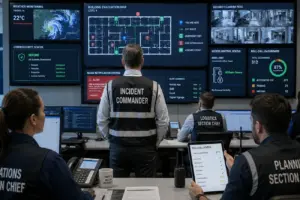
Fire safety compliance is one of the most critical responsibilities in property and facility management. Yet, even with regular inspections, many commercial buildings still struggle to meet code requirements. The most common violations often stem from everyday oversights that can have serious consequences for both safety and liability.
Understanding these recurring issues is the first step toward prevention. This guide explores the top fire code violations found in commercial buildings, explains why they occur, and provides practical strategies to avoid them. It also highlights how modern compliance tools can help you maintain ongoing readiness and peace of mind.
1. Blocked or Obstructed Exits
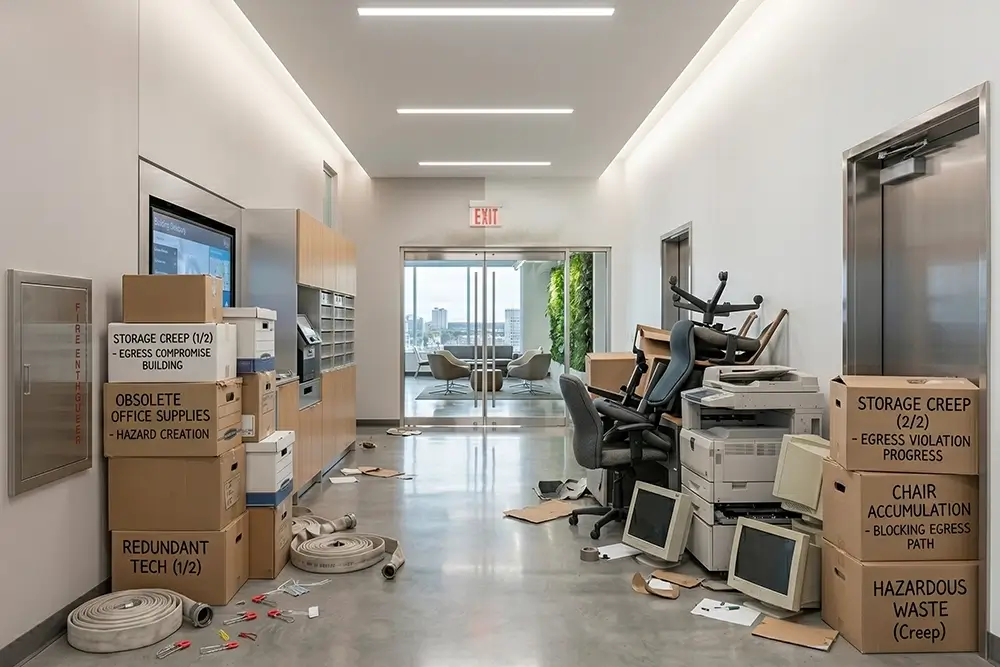
Obstructed exits are among the most frequently cited fire code violations. Storage boxes, furniture, or renovation materials often end up blocking hallways or exit doors, compromising escape routes during an emergency.
To maintain compliance, building staff should conduct regular walkthroughs to ensure all exit paths remain clear and properly marked. Signage should be illuminated and visible, and doors should open freely without requiring special tools or keys. Integrating inspection checklists into a digital platform can streamline accountability and ensure that these critical areas are reviewed consistently.
2. Missing, Expired, or Improperly Maintained Fire Extinguishers
Fire extinguishers are a simple yet essential defense against small fires, but they must be correctly maintained to remain effective. Common violations include expired inspection tags, missing units, or extinguishers placed in inaccessible areas.
Many jurisdictions require monthly visual inspections and annual maintenance of fire extinguishers by accredited technicians, though local fire code schedules should be confirmed for your region. Creating automated reminders or digital logs helps property managers stay ahead of inspection dates. It also simplifies reporting during compliance audits, reducing the risk of fines or insurance complications.
3. Fire Doors Propped Open or Damaged
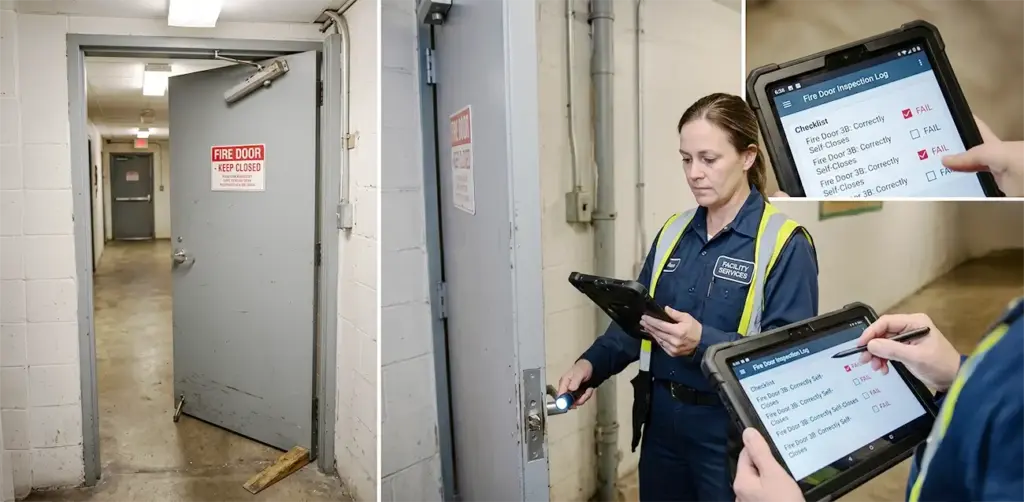
Fire doors are designed to contain smoke and flames, giving occupants valuable time to evacuate. However, when doors are propped open with wedges or furniture, their ability to perform that function is lost. Damaged seals, misaligned latches, or missing door closers are also frequent issues.
Staff should be trained to recognize and report fire door problems immediately. During regular safety checks, ensure that doors self-close properly and that all hardware is intact. Digital inspection platforms can log findings and track corrective actions, enabling property and facility teams to streamline documentation, follow-up tasks, and maintenance compliance.
4. Outdated or Incomplete Fire Safety Plans
Fire safety plans must reflect the current layout, occupancy, and operational procedures of your building. Unfortunately, many organizations let these documents become outdated, especially after renovations or tenant changes. In an emergency, outdated plans can delay response times and increase liability.
Keeping plans current involves more than simple documentation. Updates should be reviewed after building modifications, system upgrades, or regulatory changes. Cloud-based emergency management systems simplify this process by centralizing documents and allowing authorized personnel to access them anytime. This ensures everyone is working from the most accurate and compliant version.
5. Faulty Fire Alarm and Sprinkler Systems
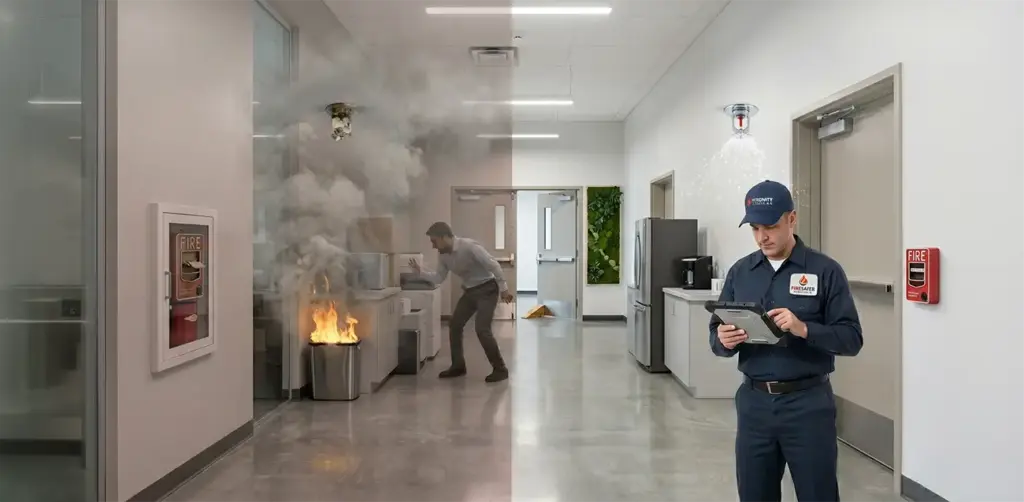
A malfunctioning alarm or sprinkler system can turn a manageable incident into a catastrophic event. Violations often occur when testing and maintenance are inconsistent, documentation is missing, or upgrades are postponed due to budget constraints.
Regular inspection and testing are mandated by local fire codes as well as standards such as NFPA 25 (inspection, testing, and maintenance of water-based fire protection systems) and NFPA 72 (National Fire Alarm and Signaling Code). Each test should be logged, and any deficiencies corrected promptly. Digital compliance platforms can automate test schedules, generate reports for auditors, and ensure no maintenance tasks are overlooked.
How to Avoid Repeat Violations Through Proactive Management
Avoiding fire code violations requires more than just passing annual inspections. It demands a proactive, system-driven approach to compliance. Property teams that adopt structured monitoring, employee training, and technology-enabled documentation gain greater visibility into their risk profile.
Consider integrating these strategies into your fire safety management program:
- Automate recurring inspections and maintenance reminders.
- Digitize documentation for easy audit access.
- Provide refresher training to building staff and occupants.
- Track corrective actions until completion.
- Engage with local authorities to stay informed of code changes.
When compliance becomes embedded in daily operations rather than treated as a once-a-year checklist, your buildings become safer and your liability exposure reduces.
Building Safer, Smarter, and More Compliant Properties
Fire code compliance is not just about meeting regulations; it’s about protecting lives, preserving property, and building trust with tenants and stakeholders. The most common violations can be prevented through awareness, accountability, and the right tools to simplify oversight.
Modern emergency management platforms provide property managers with real-time visibility, automated recordkeeping, and streamlined communication across training, planning, and response workflows. These innovations make it easier to stay compliant and respond effectively when emergencies occur.
Staying ahead of fire code violations means transforming compliance into a continuous process, one that strengthens safety culture across every level of your organization.
Discover how WPS’s technology-driven compliance and safety solutions can help you prevent common fire code violations and keep your buildings safe, compliant, and resilient.