
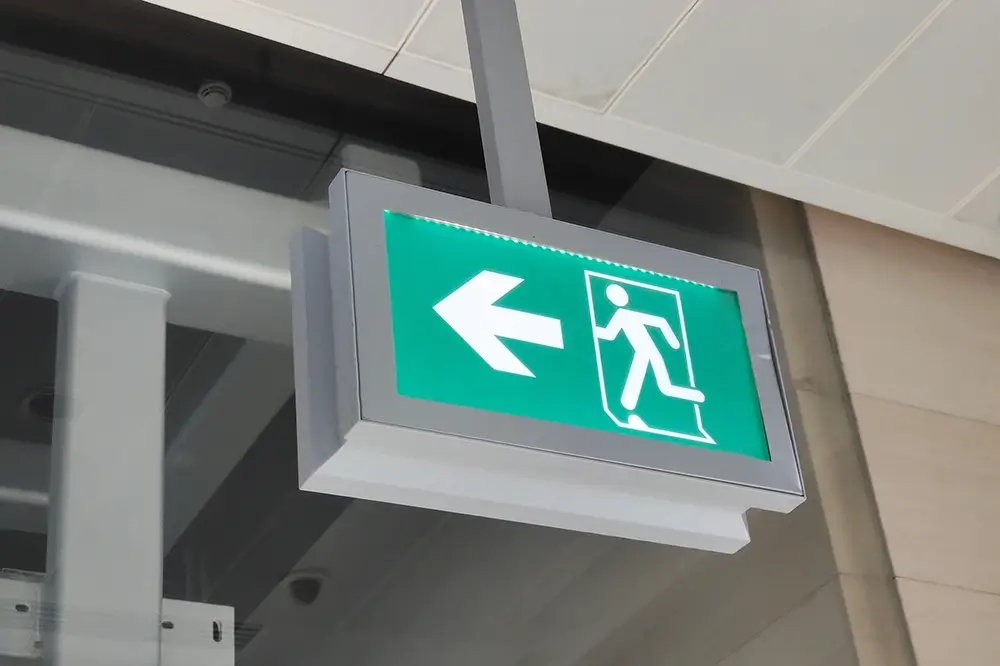
For property managers overseeing commercial or residential buildings, legal liability related to fire code compliance remains a persistent concern. Even minor oversights in evacuation planning or unclear emergency signage can lead to substantial fines, potential litigation, and lasting reputational damage. With proper planning and implementation, however, these risks can be significantly reduced while ensuring occupant safety.
The True Costs of Inadequate Evacuation Plans
When building occupants cannot quickly identify safe exits or when emergency signage is missing, outdated, or confusing, property managers face serious consequences:
- Financial Penalties – Failure to comply with mandated fire code requirements typically results in significant fines from local fire departments and regulatory authorities. These penalties can escalate with repeated violations.
- Litigation Exposure – In the event of an emergency, property managers and building owners may be held legally responsible for injuries or fatalities if investigations reveal that inadequate evacuation routes or insufficient signage contributed to the outcome.
- Reputational Damage – News of preventable safety failures spreads quickly among tenants, investors, and the broader community. A building’s safety record often matters as much to stakeholders as its amenities or location.
Meeting Regulatory Standards in Canada and the United States
Regulations and enforcement vary by jurisdiction, so confirm specific signage, map-posting, and egress requirements with your local Authority Having Jurisdiction (AHJ).
Property managers must navigate varying regulations while ensuring their buildings meet standards for accessibility, occupant load, and emergency egress. While specific requirements differ by jurisdiction, several universal principles apply:
Visibility Requirements
Exit signs must remain visible during power outages and be illuminated by a reliable power source, and in many high-rise buildings luminous egress path markings are required in exit enclosures and passageways, depending on the adopted code.
Fire Code Compliance Documentation
Both Canadian and U.S. codes require approved exit signage and compliant egress markings. Posting floor diagrams is required by some Authorities Having Jurisdiction and recommended by OSHA guidance, but it is not universally mandated for every occupancy.
Maintaining Clear Evacuation Paths
Hallways, doorways, and designated evacuation routes must remain free of obstructions at all times, as required by means-of-egress provisions, and regular inspections with documentation help demonstrate compliance.
Designing Evacuation Routes and Signage That Enhance Safety
Effective building evacuation planning starts with precise, up-to-date information and intuitive wayfinding. When designing routes and selecting signage, consider these best practices:
1. Accessibility for All Occupants
Ensure that signage, alarms, and instructions accommodate individuals with mobility, visual, or hearing impairments, and follow applicable accessibility standards for signage, such as the ADA Standards in the U.S. and CSA B651 in Canada.
2. Strategic Placement of Diagrams
Position fire evacuation maps in central, well-lit areas such as elevator lobbies, corridor entrances, and near exits, oriented to the viewer and consistent with local AHJ guidance. When placed in these high-traffic zones, occupants are more likely to familiarize themselves with routes before an emergency occurs.
3. Photoluminescent Markers for Low-Visibility Conditions
In low-visibility conditions, luminous egress path markings on stair treads, landings, handrails, and along egress paths provide crucial guidance toward safe exits, and in many high-rise buildings these markings are required by the adopted building or fire code. These markers can significantly improve evacuation speed and effectiveness during emergencies.
4. Clear Language and Universal Symbols
Use plain language and standardized pictograms to ensure consistency. In buildings where occupants speak multiple languages, universal symbols help ensure everyone understands how to exit safely regardless of language barriers.
Leveraging Technology for Documentation and Compliance
Modern digital solutions have transformed how property managers track, update, and validate emergency procedures. Systems like the WPS Evac software platform offer significant advantages:
- Digital Storage of Evacuation Plans – Eliminate the need for countless paper copies that can become outdated, lost, or damaged. Digital plans can be updated instantly and accessed from anywhere.
- Automated Drill Monitoring and Documentation – Track and record evacuation drills with precise data on participation and performance. This documentation helps demonstrate due diligence to authorities and insurance providers.
- Compliance Calendar and Reminders – Receive automatic notifications for annual audit deadlines, inspection checkpoints, and required updates. This proactive approach helps prevent compliance gaps before they occur.
Emphasizing Communication and Ongoing Training
Even the best signage and well-crafted routes may prove ineffective if occupants and staff are uninformed or unprepared. Clear communication and regular training reinforce a culture of readiness:
Regular Updates and Announcements
Distribute building-wide memos or digital bulletins that highlight any changes in emergency procedures. Emphasize the legal implications of proper preparation to stress why occupant involvement is essential.
Scheduled Drills and Practical Training
Conduct regular fire drills to test the efficiency of evacuation routes and reinforce the importance of fire code compliance. These exercises help identify potential bottlenecks or confusion points before a real emergency occurs.
Role-Specific Training Programs
Provide customized training modules that address specific responsibilities for different roles, from front-desk personnel to maintenance teams. In buildings with frequent tenant turnover, on-demand virtual training can ensure consistent knowledge transfer.
Conclusion
Effective evacuation signage and well-designed routes are more than just regulatory checkboxes; they form the backbone of a comprehensive fire safety plan. From helping occupants navigate through smoke-filled corridors to ensuring your building meets modern fire code compliance standards, investing in carefully designed signage and actionable plans significantly reduces liability.
Whether your building experiences a minor incident or a major emergency, the difference between chaos and a smooth evacuation often depends on clear communication, visible exits, and streamlined procedures. Taking the time to develop comprehensive plans and document them properly protects both lives and your reputation as a responsible property manager.
Discover How to Further Enhance Your Building’s Safety
Explore how WPS Disaster Management Solutions can help you develop comprehensive emergency planning solutions that protect occupants, ensure compliance, and reduce liability risks. With over 40 years of expertise and innovative technology-driven tools, we provide the guidance and support you need to implement effective fire safety planning for your property.