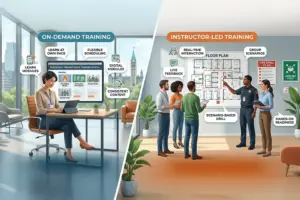

Emergency training is one of the most powerful ways to protect both lives and organizations. Buildings that invest in ongoing emergency training programs demonstrate compliance, minimize risk, and create safer environments for every occupant. Yet many properties only train once per year, overlooking how quickly people forget procedures or how staff turnover can leave critical gaps in readiness.
Studies from the Occupational Safety and Health Administration (OSHA) and the National Fire Protection Association (NFPA) consistently show that regular, scenario-based training significantly improves emergency response times and decision-making accuracy. Beyond improving safety, it also serves as tangible evidence of due diligence, helping organizations defend against liability in the aftermath of an incident.
This post explores why continuous emergency training is essential, how it reduces legal exposure, and what practical steps organizations can take to build lasting readiness.
The Legal and Financial Cost of Unpreparedness
When emergencies occur, the first question regulators and insurers ask is whether proper training and procedures were in place. A lack of training is one of the most common findings in post-incident investigations, often leading to fines, lawsuits, and reputational harm.
Regulatory bodies such as OSHA in the United States and the Canadian Centre for Occupational Health and Safety (CCOHS) require organizations to maintain comprehensive emergency action plans and conduct periodic training. Failure to do so can result in penalties reaching thousands of dollars per violation. More importantly, courts often view inadequate training as negligence, exposing building owners and managers to liability for preventable injuries or fatalities.
A 2023 NFPA review found that in nearly 40% of workplace fires where injuries occurred, staff were unsure of evacuation procedures. This highlights a critical truth: compliance paperwork alone does not ensure safety. Only consistent training can turn plans into real-world readiness.
How Regular Training Reduces Liability
Ongoing emergency training creates a documented trail of compliance and continuous improvement. This record not only demonstrates commitment to safety but also helps prove that the organization exercised reasonable care before an incident.
Key ways regular training supports liability reduction include:
Demonstrated Due Diligence:
Routine sessions show regulators and insurers that emergency preparedness is taken seriously and integrated into operations.
Improved Staff Competency:
Frequent drills and scenario refreshers help employees retain information, respond faster, and reduce confusion during real events.
Updated Procedures:
Continuous training ensures that as building layouts, systems, or regulations change, your response plans remain current and effective.
Reduced Panic and Errors:
Trained teams are less likely to make impulsive decisions, preventing injuries and mitigating damage.
The legal impact of these benefits is significant. When an incident occurs, documented training records can demonstrate compliance with local regulations and reduce exposure to negligence claims.

Building Confidence Through Consistent Learning
Emergency readiness is more than memorizing procedures; it is about building confidence and instinctive reactions. Staff who receive regular, practical training are more likely to act calmly and make sound decisions when it matters most.
Research in occupational psychology shows that people forget up to 70% of what they learn within a month if it is not reinforced. This makes ongoing training essential, particularly for properties with rotating staff or high tenant turnover. Refresher sessions can focus on:
- Reviewing evacuation routes and assembly areas
- Updating communication procedures
- Testing alarm recognition and response
- Practicing roles for floor wardens or emergency coordinators
Continuous learning fosters a culture of preparedness, where every occupant understands their role and feels capable of responding under pressure.
Creating a Culture of Preparedness
Organizations that make emergency training a continuous process, not a once-a-year event, see long-term benefits in both safety and liability management. Building leaders can encourage this culture by:
- Integrating training into annual safety planning cycles
- Recognizing and rewarding staff participation
- Incorporating digital reminders and micro-learning sessions
- Conducting debriefs after real or simulated incidents
This proactive approach not only satisfies compliance requirements but also demonstrates a genuine commitment to protecting lives. It builds trust among tenants, staff, and regulators alike.

Invest in Training That Protects People and Your Organization
Regular emergency training is one of the most effective forms of risk management. It proves due diligence, strengthens team performance, and builds a resilient safety culture. When people are well-trained, they respond faster, communicate more effectively, and prevent minor incidents from becoming major crises.
How WPS Supports Continuous Emergency Training
WPS offers structured emergency training programs designed to help organizations maintain compliance, reduce liability, and improve response confidence. Through a combination of instructor-led and on-demand training, WPS helps property and facility teams reinforce emergency procedures, strengthen preparedness, and stay ready throughout the year.To keep your organization prepared, compliant, and protected, explore how WPS’s instructor-led training and on-demand training programs can help build confidence, reduce liability, and save lives.