On-Demand vs Instructor-Led Emergency Training, Emergency training is one of the most critical investments a property or facility manager can make. Yet, deciding how to deliver that training can be challenging. Should teams complete digital courses on their own schedule, or is instructor-led training the best way to ensure engagement and retention?
Both training methods have clear advantages, but the most effective programs balance flexibility with human connection. This post explores the strengths and limitations of each approach and explains how a blended model, combining on-demand and instructor-led learning, can help your building teams build stronger preparedness, improve compliance, and respond more effectively in an emergency.
The Shift Toward Flexible Emergency Training
Across both commercial and residential properties, daily operations are more complex than ever. Staff schedules vary, tenants rotate frequently, and regulations continue to evolve. Traditional, one-size-fits-all safety sessions are no longer practical.
Digital transformation has opened new opportunities to train employees and occupants efficiently. Online fire and life safety courses, delivered through on-demand emergency training platforms, make it possible for anyone to access consistent, high-quality education at any time.
For many organizations, the challenge lies in understanding where these digital tools fit alongside traditional instructor-led sessions. Finding the right balance between the two is essential for creating a culture of preparedness that is both compliant and sustainable.
Understanding On-Demand Training
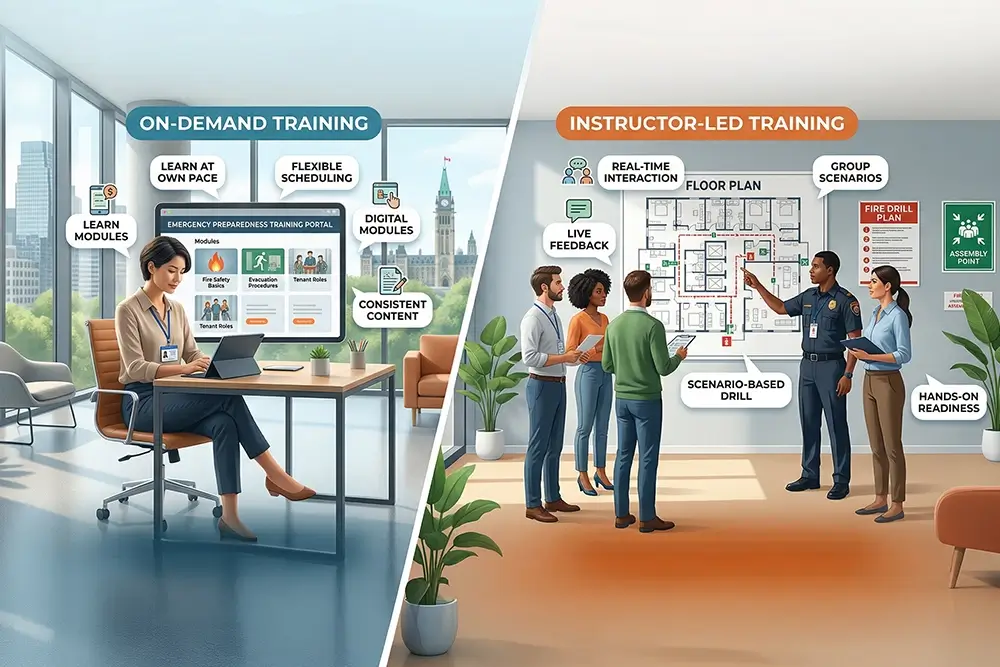
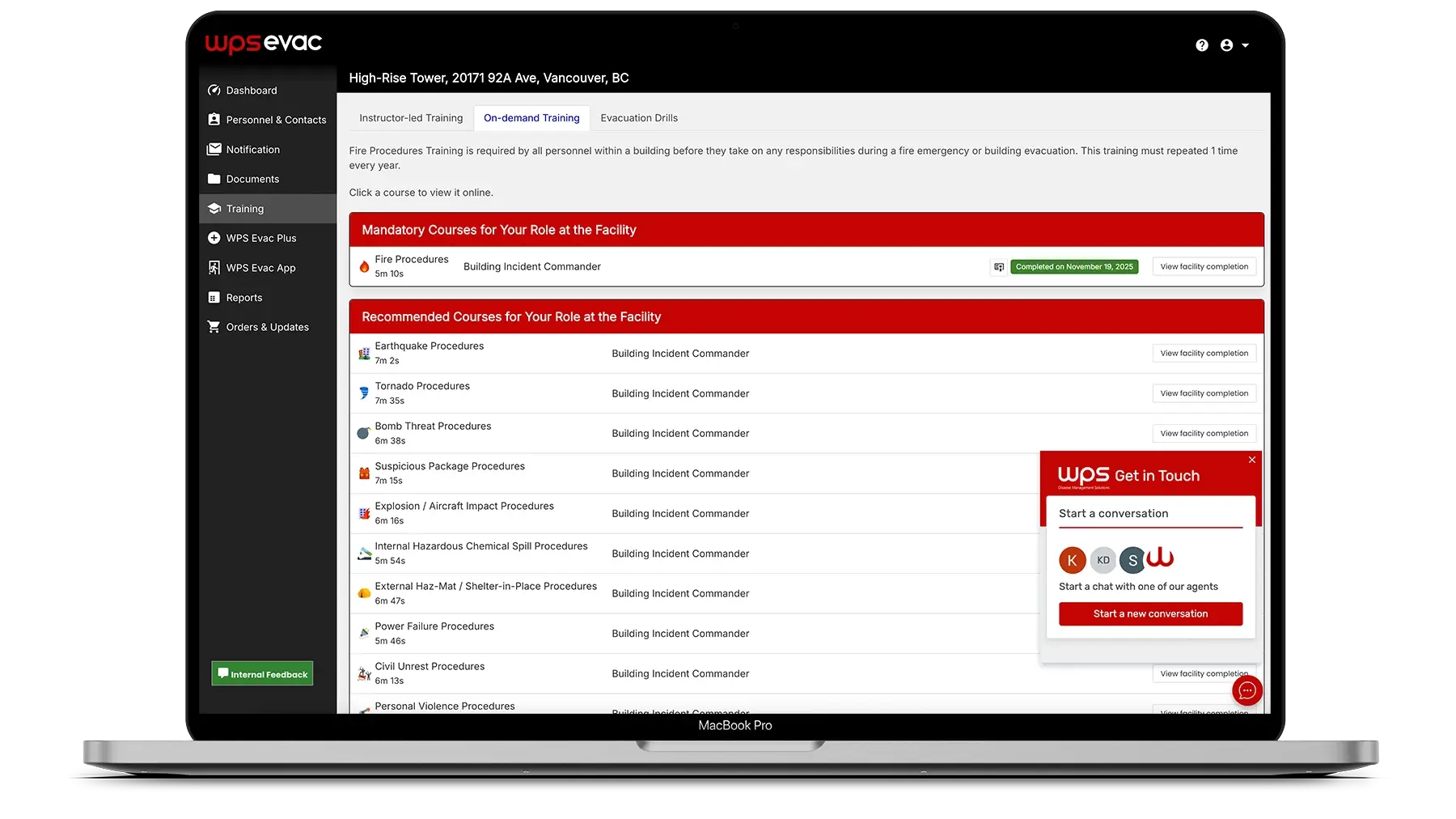
On-demand training allows staff, tenants, and contractors to learn at their own pace through digital platforms. Whether reviewing evacuation procedures, fire safety basics, or building-specific emergency roles, users can access modules from any device at any time.
Key benefits include:
- Accessibility and convenience: Staff can complete courses around their shifts, reducing scheduling challenges.
- Consistency across locations: Every participant receives the same standardized instruction, ensuring compliance across multiple sites.
- Scalability: Training can be assigned to new employees or residents quickly, ensuring no one is missed.
- Automated tracking and documentation: Digital training systems record completion data automatically, simplifying compliance reporting.
These advantages make on-demand learning particularly effective for large property portfolios, residential communities with high tenant turnover, or organizations operating across multiple locations. However, while it enhances accessibility, it cannot fully replace the benefits of hands-on experience and real-time interaction.
The Value of Instructor-Led Training
Instructor-led training, delivered in person or through live virtual sessions, adds a human dimension that digital modules cannot replicate.
Participants can ask questions, receive immediate feedback, and practice realistic scenarios under professional guidance. In emergency management, where confidence and situational awareness are critical, these experiential sessions help build practical readiness.
Benefits include:
Engagement and retention:
Participants are more likely to remember procedures when they actively discuss and demonstrate them.
Real-time clarification:
Instructors can adapt sessions to specific building layouts, recent incidents, or regulatory changes.
Team cohesion:
Group sessions encourage collaboration and help team members understand each other’s roles in an emergency.
Scenario realism:
Instructor-led simulations prepare staff for the unpredictability and stress of real emergencies.
However, these sessions can be time-intensive and logistically challenging for large or dispersed organizations. They also require careful scheduling to minimize disruption to daily operations.

The Downsides of a One-Size-Fits-All Approach
While both on-demand and instructor-led training bring value, relying solely on one method can leave gaps in preparedness.
A fully digital program may deliver convenience but less engagement. Participants might complete courses quickly without internalizing critical details. Conversely, a program based only on in-person sessions may achieve strong engagement but struggle with accessibility, scalability, and documentation.
The most effective solution is a blended model that combines both approaches.
Why a Blended Training Model Works Best
Blended emergency training combines the strengths of both methods, helping organizations maintain consistency without losing flexibility. Recurring instructor-led sessions give teams regular opportunities to learn together, ask questions, and stay aligned on procedures, while on-demand training helps fill gaps for those who miss a session and supports onboarding for new team members.
This approach strengthens overall building preparedness and helps organizations:
- Maintain consistent compliance across multiple properties
- Ensure missed training sessions do not create gaps in readiness
- Support new staff and other incoming team members with accessible training
- Track participation and completion more efficiently
- Adapt training delivery to different building types, schedules, and operational needs
WPS has long championed this balanced approach through its digital learning systems and professional training services. By combining recurring instructor-led sessions with accessible on-demand training, WPS helps property teams maintain readiness, strengthen compliance, and ensure more people receive the training they need.
Tailoring the Right Mix for Your Building
Every property is different. A commercial high-rise, for example, may need more structured, instructor-led training due to complex evacuation routes and high occupant density. A residential community may rely more heavily on on-demand training to accommodate varied schedules.
When designing your training program, consider factors such as:
- Building type and occupancy: Different layouts and populations require customized approaches.
- Staff availability and turnover: Frequent personnel changes may benefit from scalable on-demand systems with automated tracking.
- Regulatory requirements: Some jurisdictions mandate live training or periodic drills led by certified instructors.
- Organizational culture: Blended programs can strengthen a culture of safety by combining convenience with collaboration.
By assessing these variables, property managers and facility teams can design programs that deliver measurable results, improving awareness, confidence, and compliance.
Building a Culture of Preparedness Through Continuous Learning
Training should never be viewed as a one-time event. Safety knowledge fades quickly if not reinforced. Combining digital refreshers with periodic instructor-led sessions keeps emergency procedures top of mind and builds long-term resilience.
Regular updates ensure that new regulations, technologies, and building changes are reflected promptly. This proactive mindset positions property managers as leaders in safety, not just participants in compliance.
The goal is to empower every occupant and staff member with the knowledge and confidence to respond effectively during an emergency.
The Smart Way Forward in Emergency Training
Choosing between on-demand and instructor-led training isn’t an either-or decision. The most resilient buildings rely on both, combining the accessibility of digital tools with the depth of live instruction.
By adopting a blended model, property and facility managers can reduce training fatigue, simplify compliance, and create safer environments for everyone who lives or works in their buildings.Discover how WPS’s instructor-led training and on-demand training solutions can help you strengthen your safety programs, streamline compliance, and build confidence across every level of your organization.