
Fire Safety Plan Training for Building Emergency Teams
Fire safety plan training helps assigned building personnel understand their roles before, during, and after a fire emergency.
Fire safety plan training is most effective when it starts with the building itself: the emergency team, life-safety systems, exit pathways, assembly area, and procedures that first responders rely on when they arrive. WPS Disaster Management Solutions delivers the CO-FSP-120 Introduction to Fire Safety Planning, 120-Command & Operations Training course for property managers, operations staff, security, supervisory staff, and other assigned emergency personnel.
This page explains the core topic behind the training: how a building-specific fire safety plan works, why assigned roles matter, and how emergency personnel support life safety without replacing first responders.
- 40+ years
- Thousands of buildings
- Canada & U.S.
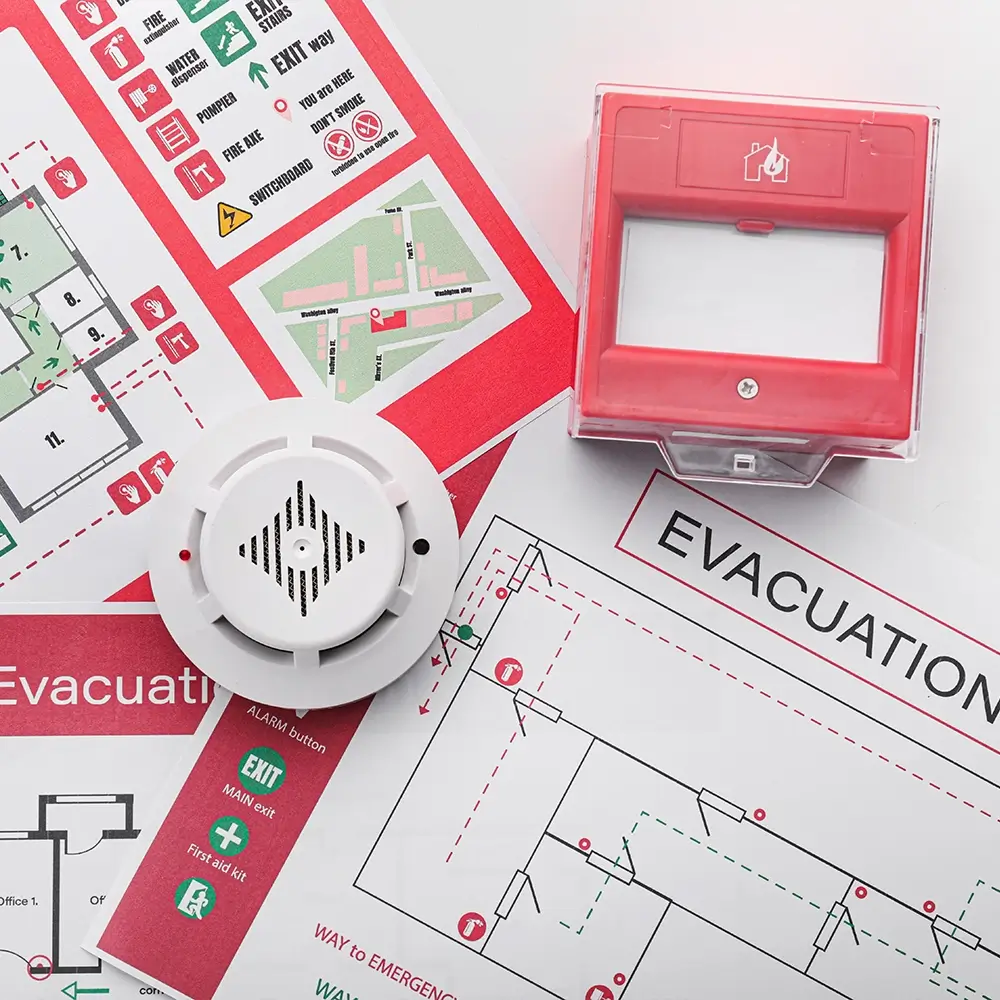












Why Fire Safety Plan Training Matters
A fire safety plan can fail in practice when the people assigned to carry it out do not understand their roles.
In a real emergency, community first responders cannot manage every building-specific task alone. Building emergency personnel may need to verify conditions, communicate information, support evacuation flow, account for reports, help persons requiring assistance, and keep people moving away from hazards.
Without training, the plan can become a document instead of an operating guide. Confusion around authority, reporting lines, exit conditions, assembly areas, and life-safety systems can slow decisions when clear action matters most.
What a Fire Safety Plan Is
A fire safety plan is a building-specific document that outlines fire prevention, emergency procedures, assigned responsibilities, evacuation information, and life-safety system details.
The Canadian Centre for Occupational Health and Safety describes fire safety plans as property-specific documents that support safe evacuation, fire prevention, and damage control. In practice, a strong plan also gives supervisory staff and first responders a shared reference point.
WPS develops fire safety plans with clear role-specific procedures, evacuation routes, assembly areas, and digital access through the WPS Evac App where configured. Training helps the people named in the plan understand how those pieces work together.
Building Emergency Personnel and Reporting Lines
Building emergency personnel support the fire safety plan by carrying out assigned responsibilities and relaying vital information through a clear chain of communication.
The deck identifies roles such as Fire & Life Safety Director or Emergency Director, Deputy Director, Building Response Team, Lobby and Exit Control Personnel, Assembly Area Coordinator, Floor Warden, Deputy Floor Warden, and Assistance Monitor. Each role supports a different part of the response, from administration and incident management to occupant movement and assembly-area reporting.
Persons Requiring Assistance (PRA) are also part of planning. Assistance Monitors help direct or support people who may need assistance because of mobility limits, injury, late-stage pregnancy, or temporary conditions, while building teams coordinate with first responders as directed.
Incident Command System for Building Response
The Incident Command System (ICS) gives building teams a scalable structure for managing information, roles, and decisions during an emergency.
In the deck, the plan is based on Incident Command System (ICS), with one Incident Commander and supporting functions such as Operations, Logistics, Planning and Intelligence, and Finance and Administration. For a building team, the practical takeaway is not a complex command chart. It is the need for one clear lead, defined support roles, and disciplined communication.
This structure helps prevent duplicate instructions, missing reports, and unclear handoffs. It also gives the building team a more organized way to collect vital information and relay it to fire, police, ambulance, or other responders.
Emergency Response Starts With Realistic Expectations
An emergency is a shorter-duration event where responders are generally available, while a disaster can overwhelm local response resources.
The deck distinguishes between emergencies, such as a building fire, medical emergency, or hazardous materials spill, and disasters, such as severe weather, flood, earthquake, or bomb blast. This page stays focused on the fire safety plan context, but that distinction matters because it shapes expectations.
During an emergency, building personnel help minimize impact by reacting to the plan, collecting vital information, relaying it to community first responders, and assisting as directed. During a larger disaster, resources may be delayed, which reinforces the value of current plans, trained roles, and accurate building information.
Life Safety Systems and Exit Path Awareness
Building teams need to understand the systems and pathways that support safe movement during a fire emergency.
The deck highlights life-safety systems such as fire alarm systems, automatic fire suppression, elevators, emergency power, communications, emergency exits, and general building information. Training does not turn participants into system technicians, but it does help them understand what systems exist and how they support the plan.
Exit pathways can be affected by smoke, heat, debris, hazardous materials, water, blocked stairs, obstructed corridors, and people moving in conflicting directions. Knowing the building’s exits, crossover floors where applicable, stairwell conditions, and assembly area helps teams recognize issues and communicate them clearly.
Are Fire Safety Plan Roles and Training Required?
Fire safety plan training requirements vary by jurisdiction, occupancy, employer obligations, and building type, but many codes and workplace rules expect plans, trained personnel, and documented procedures.
In Canada, National Fire Code-based fire codes and sources such as the Canada Occupational Health and Safety Regulations require emergency planning in many workplace settings, including evacuation procedures and provisions for employees requiring special assistance. In the United States, OSHA Emergency Action Plan requirements and the International Fire Code include expectations for emergency procedures, evacuation routes, employee assistance, alarms, and training where applicable.
Because requirements vary, training should be framed as supporting due diligence, not guaranteeing compliance by itself. WPS instructor-led emergency training is tailored to the building’s fire safety plan, alarm system, suppression equipment, exit pathways, and assembly areas.
- jurisdiction
- occupancy
- employer obligations
- building type
- jurisdiction
National Fire Code-based fire codes
Canada Occupational Health and Safety Regulations
OSHA Emergency Action Plan requirements
International Fire Code
Fire Safety Plan Training From WPS
CO-FSP-120 Introduction to Fire Safety Planning, 120-Command & Operations Training is for assigned building personnel who help administer, manage, and carry out the building’s fire safety plan.
The deck is designed for a specific building, with placeholders for instructor, building name, address, local details, fire evacuation map, crossover floors, assembly area, and procedures. WPS should tailor the session to the building’s plan rather than presenting generic instructions.
Participants can expect to:
- Understand the purpose of the fire safety plan and why it must be kept updated.
- Recognize the responsibilities of supervisory staff and building emergency personnel.
- Understand the reporting structure between wardens, response teams, incident command, and first responders.
- Identify how life-safety systems, exit pathways, and assembly areas support response.
- Reinforce key messages: know your role, participate in training and drills, and use WPS Evac where available.
WPS supports instructor-led delivery through emergency response training for buildings, with online screen-sharing and onsite training available upon request. New WPS Fire Safety Plan or Multi-Hazard Emergency Plan purchases may include a free 1-year subscription to WPS Evac Software and the WPS Evac App, supporting plan access, records, procedures, and related emergency-management workflows through WPS Evac Software and App.
- 40+ years
- Thousands of buildings
- Canada & U.S.
Fire Safety Plan Training Answers
Fire safety plan training prepares building emergency personnel to understand their assigned roles, building systems, reporting lines, and plan-based response responsibilities.
What is fire safety plan training?
Fire safety plan training is building-specific instruction that helps assigned personnel understand the fire safety plan, emergency roles, communication structure, life-safety systems, evacuation support, and first-responder handoff.
Who needs fire safety plan training?
Fire safety plan training is for Fire & Life Safety Directors, Deputy Directors, Building Response Teams, Floor Wardens, Assistance Monitors, property managers, facility staff, security teams, and other assigned building emergency personnel.
How does WPS deliver fire safety plan training?
WPS delivers building-specific instructor-led training tailored to the fire safety plan, alarm system, suppression equipment, exit pathways, assembly areas, and assigned roles. Training may be supported by WPS Evac Software, WPS Evac App, and related records.
Fire Safety Plan Training FAQs
Fire safety plan training questions usually focus on roles, requirements, emergency structure, life-safety systems, and how building-specific instruction supports due diligence.
What is the primary purpose of fire safety plan training?
The primary purpose of fire safety plan training is to help assigned building personnel understand how to carry out their responsibilities under the building’s fire safety plan. It supports clearer communication, faster role recognition, better information relay, and stronger coordination with first responders.
Is fire safety plan training required for every building?
Fire safety plan training requirements vary by jurisdiction, occupancy, and building type. National Fire Code-based fire codes in Canada and U.S. sources such as OSHA Emergency Action Plan requirements and the International Fire Code may require plans, designated personnel, evacuation procedures, and training in applicable settings.
Who is responsible for managing the fire safety plan?
The deck identifies the Fire & Life Safety Director or Emergency Director as responsible for administration, maintenance, and implementation of the fire safety and evacuation plan unless local requirements assign responsibility differently. A Deputy Director may be appointed as backup.
What is the role of Incident Command System (ICS) in fire safety plan training?
Incident Command System (ICS) gives building emergency personnel a scalable structure for leadership, communication, and task coordination. In this training context, Incident Command System (ICS) helps clarify who manages the incident, who reports information, and how support roles connect to first responders.
How does fire safety plan training address Persons Requiring Assistance (PRA)?
Fire safety plan training identifies Persons Requiring Assistance (PRA) as people who may need help because of temporary or permanent conditions. The deck assigns Assistance Monitors to help direct or support these occupants to safe areas and coordinate with building response teams or first responders.
What life-safety systems should building emergency personnel understand?
Building emergency personnel should understand the systems referenced in their fire safety plan, such as fire alarms, automatic suppression, emergency exits, elevators, emergency power, communications, crossover floors where applicable, and assembly areas. Training helps personnel recognize these systems and communicate conditions clearly.
Does fire safety plan training make a building compliant?
Fire safety plan training supports due diligence, but it does not guarantee compliance by itself. National Fire Code-based fire codes in Canada and U.S. sources such as OSHA and the International Fire Code should be applied based on jurisdiction, occupancy, building type, documentation, drills, and local authority requirements.
Request Fire Safety Plan Training
After the form is submitted, a WPS representative will follow up to confirm the building, audience, training needs, and next steps.