
Occupant Fire Safety Training for Workplace and Home Fire Readiness
Occupant fire safety training helps people understand what to do when they discover a fire, hear an alarm, cannot exit safely, or need to prevent common hazards.
WPS's OCC-FSP-60, Occupant Fire Safety at the Workplace & Home - 60, focuses on the practical decisions building occupants may face before and during a fire emergency. The topic matters because safe evacuation depends on familiar alarms, clear exit behavior, basic prevention habits, and knowing when personal safety comes before fighting a fire.
This page explains the core fire safety concepts covered in the training, including workplace fire and evacuation procedures, home preparedness, fire prevention, defend-in-place actions, and portable fire extinguisher awareness. For broader building programs, WPS also supports instructor-led emergency training, fire safety plans, and digital access through WPS Evac Software and mobile apps.
- 40+ years
- Thousands of buildings
- Canada & U.S.
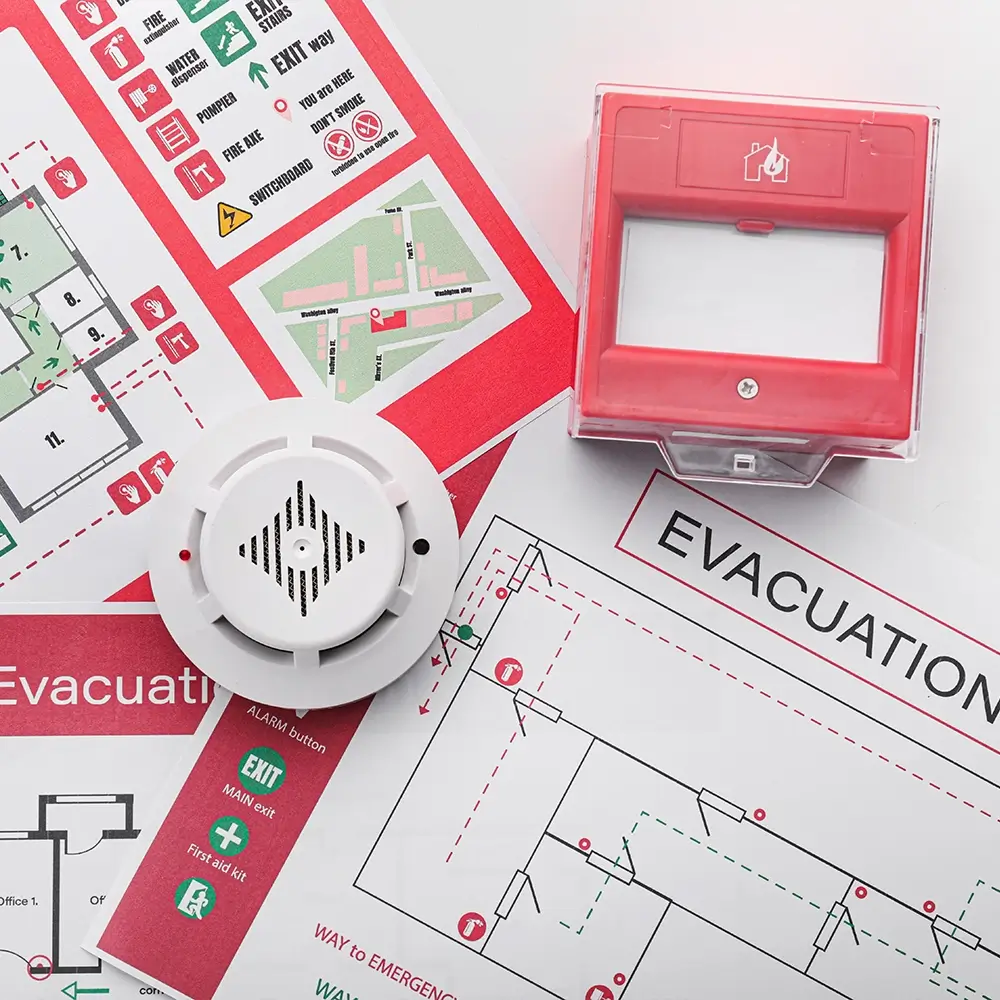












Why Occupant Fire Safety Breaks Down
Fire safety breaks down when occupants do not recognize alarms, delay evacuation, use unsafe exits, ignore hazards, or try to use equipment without understanding its limits.
In a fire, small decisions can create larger risks: running, using elevators, opening the wrong door, re-entering a building, or choosing an exit filled with smoke. The deck's message is simple: occupants need clear, repeatable actions for workplace and home settings before stress, smoke, noise, or confusion interfere.
The biggest gaps are usually practical, not technical:
- Not knowing the nearest safe exit or alternate exit.
- Not understanding alert and evacuation alarm signals.
- Forgetting to close doors behind you.
- Treating an extinguisher as the first response instead of evacuation support.
- Ignoring hazards such as blocked exits, defective doors, overloaded circuits, or flammable materials.
What Occupant Fire Safety Means
Occupant fire safety is the everyday knowledge and emergency behavior that helps people prevent fires, respond to alarms, evacuate safely, and protect themselves if exit routes are not usable.
The deck treats occupants as active participants in fire readiness, not passive recipients of instructions. Occupants may need to alert others, activate a pull station, call 9-1-1, move through exits calmly, avoid elevators, identify hazards, and follow directions from building management or the fire department.
Know alarms and exits
Act safely during fire
Prevent common hazards
Occupant fire safety also connects workplace and home preparedness. At work, procedures must reflect the building's fire alarm signals, exits, stairwells, and assembly expectations. At home, preparedness includes smoke alarms, escape routes, outside meeting places, and regular practice.
Workplace Fire Evacuation Procedures for Occupants
Workplace fire evacuation procedures tell occupants how to move from alarm or fire discovery to a safe location without increasing risk for themselves or responders.
The deck emphasizes immediate life-safety actions: get people out of immediate danger, close the door to the room or area, activate the alarm, call 9-1-1, notify nearby occupants, and leave by the nearest safe exit or stairwell. Elevators are not part of the fire evacuation route.
1. Discovering a fire
Move people away from immediate danger, close doors where safe, activate the red alarm pull station, call 9-1-1, and begin evacuation.
2. Hearing a fire alarm
A continuous evacuation alarm means leave by the nearest safe exit. An alert signal may mean standing by for instructions through emergency voice paging, building management, or the fire department.
3. Moving out safely
Walk, stay orderly, avoid pushing, close doors behind you, use an alternate exit if smoke blocks the route, and move away from the building once outside.
What to Do If You Cannot Safely Reach an Exit
Defend-in-place means moving into a safer enclosed area, limiting smoke entry, calling for help, and staying visible until responders can assist.
The deck presents defend-in-place as a backup when an exit route is blocked or unsafe. Occupants are told to stay low to avoid smoke and toxic gases, retreat into a closed space, close doors and openings, seal gaps with available soft materials, and call 9-1-1 if a phone is available.
If a window faces the street and materials are available, occupants can make a large help sign with their suite and floor number. The deck also cautions against opening or breaking windows unless necessary, because that can draw smoke or gases into the room.
Home Fire Escape Planning Starts Before the Alarm
Home fire escape planning gives families and residents advance warning, more than one way out, and a shared meeting point before an emergency happens.
The deck covers smoke detectors, escape routes, assistance planning, clear windows, outside meeting places, and regular practice. It also reinforces "once out, stay out," which keeps people from re-entering a dangerous structure after evacuation.
Key home preparedness actions include:
- Install smoke detectors on every level and near sleeping areas, following manufacturer directions.
- Clean smoke detectors monthly and change batteries at set times each year.
- Plan two escape routes from each room, home, apartment, or condo where possible.
- Ask building management about recommended assembly areas in apartments or condos.
- Practice escape plans at least twice a year.
For residential communities, WPS also provides residential software and mobile app support that can help occupants access procedures and emergency information.
stay out
Fire Prevention Starts With Reporting Hazards Early
Fire prevention depends on occupants noticing hazards and reporting them before they become emergencies.
The deck highlights common hazards such as flammable materials stored in undesignated areas, worn extension cords, overloaded circuits, oily rags, overheating equipment, defective exit lights, inadequate corridor or stairwell lighting, defective fire or exit doors, and obstructed exit routes. The key message is direct: if you see a potential fire hazard, tell someone.
Portable fire extinguishers are presented with limits. Occupants should sound the alarm, call 9-1-1, confirm an evacuation route, tell someone they are attempting to use the extinguisher, check that the extinguisher matches the fire class, and only proceed if the fire is small and not spreading. The deck uses the Pull, Aim, Squeeze, Sweep (P.A.S.S.) method and stresses evacuation if the fire cannot be controlled quickly.
Is Occupant Fire Safety Training Required?
Occupant fire safety training requirements vary by jurisdiction, occupancy, employer obligations, and building type, but many Canadian and U.S. frameworks expect documented procedures, training, evacuation planning, and fire prevention measures.
Canada examples
- National Fire Code-based fire codes
- Canadian Centre for Occupational Health and Safety
In Canada, National Fire Code-based fire codes and Canadian Centre for Occupational Health and Safety guidance describe fire safety plans, orderly evacuation, fire prevention, assigned responsibilities, drills, and staff training as common parts of building fire protection programs.
U.S. examples
- OSHA 29 CFR 1910.38
- International Fire Code
In the United States, Occupational Safety and Health Administration (OSHA) guidance and 29 Code of Federal Regulations 1910.38 address emergency action plans, evacuation procedures, alarm procedures, employee review, and training where the standard applies.
The International Fire Code also includes emergency planning and preparedness provisions where adopted. WPS training supports due diligence by helping occupants understand building-specific procedures and practical fire safety behaviors, but training alone does not make a building compliant.
OCC-FSP-60 Occupant Fire Safety at the Workplace & Home - 60
OCC-FSP-60 is a 60-minute WPS training course for building occupants who need practical fire safety awareness for workplace and home settings.
The deck shows the training is tailored with building name, address, city, and province placeholders, which indicates the session can be adapted to the specific property without publishing those details on the page. It covers workplace fire and evacuation procedures, home emergency preparedness, getting prepared, fire prevention, and fire extinguisher awareness.
Participants learn to:
- Recognize immediate actions when a fire is discovered.
- Understand alarm responses and safe evacuation behavior.
- Use defend-in-place concepts when exiting is unsafe.
- Identify home preparedness steps such as smoke detectors and two escape routes.
- Recognize fire hazards and the limits of portable extinguisher use.
WPS provides training as part of its broader emergency-response training offering for building emergency personnel and occupants, with instructor-led options supported on the WPS website. WPS also offers a free 1-year WPS Evac subscription with every new WPS Fire Safety Plan or Multi-Hazard Emergency Plan, helping teams connect plans, procedures, training, and records through WPS Evac Software and the WPS Evac App.
- 40+ years
- Thousands of buildings
- Canada & U.S.
Occupant Fire Safety Training Answers
Occupant fire safety training gives workplace and home occupants plain-language instruction on evacuation, alarms, fire prevention, defend-in-place decisions, and extinguisher awareness.
What is occupant fire safety training?
Occupant fire safety training is practical instruction that helps people respond to fire alarms, report fires, evacuate through safe exits, avoid elevators, close doors, recognize hazards, and understand when defending in place may be necessary.
Who needs occupant fire safety training?
Occupant fire safety training is for people who work in, live in, or regularly occupy a building, especially where property teams need occupants to understand fire procedures, alarm signals, exits, assembly expectations, and basic prevention responsibilities.
How does WPS deliver occupant fire safety training?
WPS delivers building-focused emergency training through instructor-led training and related emergency-training services, supported by WPS's experience with fire safety plans, emergency procedures, WPS Evac Software, and the WPS Evac Mobile App.
Occupant Fire Safety Training FAQs
Occupant fire safety training questions usually focus on what occupants should do, what requirements may apply, and how workplace and home preparedness connect.
What is the first thing an occupant should do if they discover a fire?
An occupant should move people out of immediate danger, close the door to the room or area if safe, activate the fire alarm, call 9-1-1, notify nearby occupants, and evacuate by the nearest safe exit or stairwell.
Why does occupant fire safety training tell people not to use elevators?
Occupant fire safety training tells people not to use elevators because fire conditions can affect elevator operation and expose occupants to smoke, heat, or delayed evacuation. The deck directs occupants to use safe exits or stairwells during fire evacuation.
What does defend-in-place mean during a fire?
Defend-in-place means staying in a safer enclosed space when an exit route is not usable. Occupants close doors and openings, stay low, seal gaps where possible, call 9-1-1, and signal their location to responders if safe to do so.
Do occupants need fire extinguisher training before using an extinguisher?
Yes, occupants should understand extinguisher limits before attempting use. The deck says to sound the alarm, call 9-1-1, confirm an evacuation route, choose the correct extinguisher type, and only attempt use if the fire is small and not spreading.
What home fire preparedness topics are covered in occupant fire safety training?
The deck covers smoke detectors, two escape routes, assistance planning for people with disabilities, windows and security grating, low movement in smoke, outside meeting places, apartment or condo assembly areas, and practicing escape plans at least twice a year.
Is occupant fire safety training required in Canada and the United States?
Requirements vary by jurisdiction, occupancy, and building type. Canadian examples include National Fire Code-based fire codes and Canadian Centre for Occupational Health and Safety guidance. U.S. examples include OSHA 29 CFR 1910.38 and the International Fire Code where adopted.
How is this different from fire drill or floor warden training?
This training focuses on building occupants and their personal fire safety actions at work and home. Fire drill training and floor warden training are separate topics that typically focus more on organized drill execution, assigned emergency roles, and warden responsibilities.
Request Occupant Fire Safety Training
After the training request form is submitted, WPS can follow up to confirm the building, audience, delivery needs, and how the session should be tailored.