
Fresno Fire Safety Plans and Multi-Hazard Plans
WPS helps Fresno property managers, building owners, and facility leaders strengthen compliance and emergency readiness with building-specific fire safety plans and multi-hazard emergency plans tailored to how their buildings actually operate.
If you are looking for fire safety plans in Fresno, the real question is not just whether your building has emergency documentation. It is whether your procedures are current, building-specific, and practical enough to support occupant safety, code compliance, and real-world response in a city where smoke, heat, power disruption, and complex building operations can all affect emergency decision-making.
Trusted by property managers across North America










Fresno Fire Safety Plans for Buildings
In Fresno, a fire safety plan often needs to do more than sit on file. For many commercial, multifamily, mixed-use, and high-rise buildings, emergency planning is shaped by the California Fire Code, California emergency planning rules, and Fresno Fire Department processes tied to inspections, fire protection systems, and ongoing documentation. The value of a fire safety plan depends on whether it can actually support a safe, organized response inside the building.
That practical need is especially important in Fresno because local operating conditions can complicate emergency response. Smoke events can affect indoor air quality and occupant messaging even when the fire is outside the city. Extreme heat can add stress to vulnerable occupants, cooling systems, and outdoor assembly decisions. Power interruptions can affect lighting, access control, communications, and HVAC performance. In some properties, site access, parking layouts, service yards, or flood-prone areas can also affect evacuation flow and emergency coordination.
✦ Operational Reality
Why Fire Safety Planning Is More Operationally Complex in Fresno
In Fresno, the challenge is rarely just writing procedures. The challenge is building an emergency plan that reflects how people actually move through the property, how designated staff respond under pressure, how communication works across tenants or occupants, and how local heat and smoke conditions can affect what would otherwise be a straightforward fire response.
Many Fresno properties also face practical operating issues that generic templates do not solve well. Mixed occupancies, after-hours staffing, larger mechanical systems, service corridors, gated access points, and multi-building campuses can all change how evacuation, communication, and incident coordination should work in practice.
Heat Exposure
Fresno’s extreme summer temperatures can affect evacuation assembly, vulnerable occupants, staffing endurance, and decisions about sheltering or relocation.
Smoke Conditions
Wildfire smoke can affect indoor air quality, occupant instructions, HVAC operations, and whether outdoor gathering remains appropriate.
Large Building Systems
Buildings with larger HVAC systems, fire alarm interconnections, and life-safety systems often require more detailed coordination and maintenance awareness.
Mixed Occupancies
Office, retail, residential, hospitality, and institutional uses can create different occupant behaviors, staffing roles, and communication needs within the same property.
Fire Safety Plan Services in Fresno
Fire Safety Plans
Building-specific fire safety plans designed to support code compliance, occupant safety, and clear emergency procedures for Fresno buildings.
Multi-Hazard Plans
Emergency plans that go beyond fire response and help Fresno properties prepare for smoke events, heat, outages, and other operational disruptions.
What Fresno Property Managers Are Actually Deciding
When a building needs a fire safety plan, the decision is usually bigger than whether a document exists. Property managers and building owners are often deciding whether their current procedures are still usable, whether staff responsibilities are clear enough to carry out the plan, whether the building is aligned with code expectations, and whether broader local risks now justify a more complete multi-hazard emergency planning approach.
In Fresno, that decision can become more urgent because the same building may need to address fire response, smoke impacts, extreme heat, building system dependencies, changing tenancy, and nonbusiness-hour conditions at the same time. A plan can look complete on paper and still fall short operationally if it does not match the building layout, occupant profile, staffing model, or communication realities.
A plan can be technically present and still operationally weak.
Fire Safety Plan Requirements in Fresno
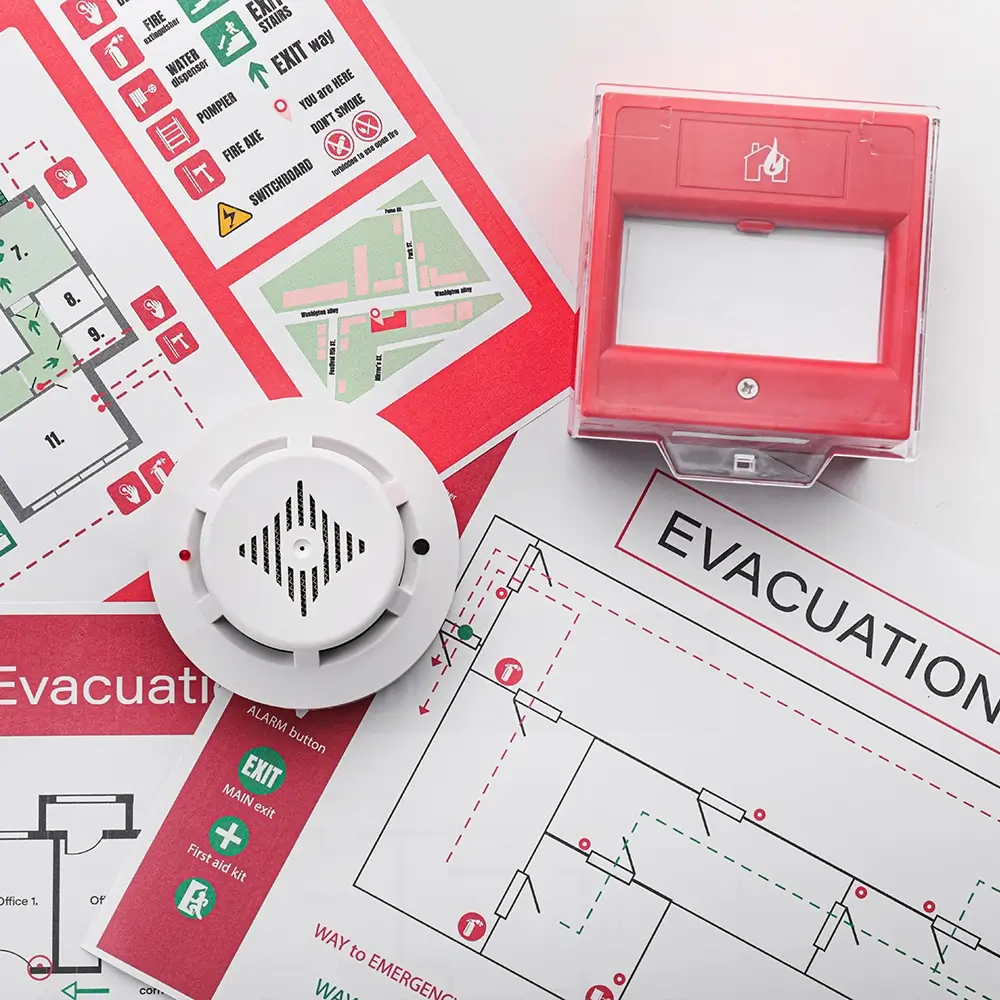
In Fresno, fire safety planning requirements are shaped by the California Fire Code, California emergency planning rules, and Fresno Fire Department processes related to inspections, fire protection systems, and life-safety documentation. Depending on the building type, height, occupancy, and use, owners or operators may need emergency procedures, posted information, designated responsibilities, training, drills, and current documentation that supports an effective emergency response.
For many office buildings two or more stories in height, California rules require emergency procedures information to be made available to building occupants through posted floor plans or other approved methods. For hotels, motels, lodging houses, high-rise office buildings, and certain care occupancies, emergency procedures information and written facility emergency planning obligations are more detailed, including designated personnel, posted information, and training expectations.
For Fresno property managers, that often means the fire safety plan needs to do more than satisfy a basic paperwork requirement. It should reflect how occupants actually move through the property, how communication is handled during emergencies, where assistance may be needed, how responsibilities are assigned, and how the plan stays current as staffing, tenancy, systems, or building conditions change.
What a Fresno building fire safety plan often needs to address
- Building-specific evacuation procedures
- Roles for supervisory staff and designated personnel
- Occupant communication steps
- Posted emergency information and route clarity
- Procedures for business and nonbusiness hours
- Training and drill support
- Updates when staffing, occupancy, or building conditions change
- Coordination with fire protection system records and ongoing compliance processes
✦ Shaped by layered code
- California Fire Code
- California Emergency Planning Rules
- Fresno Fire Department Processes
Life-Safety Documentation
✦ The Difference That Matters
Why Generic Fire Safety Plans Often Fall Short
A generic plan may describe what a building should do during an emergency, but that does not mean it reflects how your Fresno property actually operates. If the plan does not match the building layout, occupancy mix, staffing structure, communication flow, gate or access conditions, HVAC behavior, or local hazard profile, it may be harder to use when it matters most.
That gap becomes more serious when the building has high occupant turnover, multiple tenant groups, large common areas, after-hours operations, or dependencies on fire alarm, smoke control, or mechanical systems. In Fresno, local heat, air quality concerns, and power disruption risks can make a fire-only template too narrow to support real decision-making.
Generic Template vs Building-Specific Planning
Standard
Generic Template Plan
- Broad language
- Limited local relevance
- Weaker fit for real staffing and occupancy patterns
- Harder to maintain in practice
- Less useful when conditions change during an incident
★ Recommended
Building-Specific Plan
- Property-based procedures
- Clearer staff roles
- Better fit for Fresno operating conditions
- Stronger coordination with actual systems and circulation
- More practical for drills, updates, and real emergencies
✦ Beyond Fire Alone
Why Multi-Hazard Planning Matters in Fresno
In Fresno, emergency readiness often should not stop at a fire-only plan. The city’s climate and operating context make broader emergency planning relevant for many occupied buildings. Wildfire smoke can degrade air quality far from the fire source and force changes to occupant messaging, HVAC settings, and shelter decisions. Extreme heat can affect vulnerable occupants, building cooling performance, and whether outdoor assembly is practical. Utility disruptions can interrupt lighting, elevators, communications, and access systems. In some locations, flood-related site access issues can also affect continuity and emergency coordination.
Fresno’s own local code context also reflects climate-related concerns. The city has adopted local fire code amendments based in part on extreme temperatures, drought-related water supply concerns, poor air quality, and other local conditions. For property managers, that reinforces the value of planning that reflects Fresno’s real operating environment rather than a generic national template.
A multi-hazard emergency plan helps bring those realities into one building-specific structure. Instead of treating fire, smoke, heat, outages, and other incidents as unrelated problems, it creates a coordinated framework for response, communication, responsibilities, and occupant guidance.
Wildfire Smoke
Can affect indoor air quality, occupant communication, and outdoor assembly decisions even when the fire is outside Fresno.
Extreme Heat
Can affect vulnerable occupants, staff performance, HVAC strain, and relocation or shelter decisions.
Power Outages
Can disrupt lighting, access control, communications, elevators, and building operations.
Building System Interruption
Fire alarm, smoke control, and HVAC interactions can affect how procedures need to be carried out in larger buildings.
Localized Flooding or Site Access Issues
Can complicate parking access, service routes, loading areas, or emergency vehicle movement at some properties.
What Building-Specific Planning Should Cover
A useful fire safety or multi-hazard plan should be tailored to how the property actually functions. That includes not only code-related procedures, but also the operational realities that affect emergency response in the building.
Building layout and egress realities
Procedures should reflect the actual exits, stairwells, circulation routes, access restrictions, and movement constraints of the property.
Staff roles and emergency responsibilities
Designated personnel should understand what they are responsible for before, during, and after an incident.
Occupant communication
Buildings need clear procedures for informing tenants, visitors, residents, contractors, and staff during emergencies and drills.
Nonbusiness-hour and low-staffing conditions
Emergency procedures should still work when occupancy patterns change or onsite staffing is reduced.
Smoke and heat contingencies
In Fresno, planning may need to address how smoke events and extreme heat affect assembly areas, sheltering, air handling, and occupant guidance.
Systems and documentation readiness
Plans should align with fire alarm, sprinkler, standpipe, smoke control, and inspection record processes so building teams can maintain readiness over time.
Need Emergency Training for Your Fresno Buildings?
A plan is most effective when the people responsible for carrying it out understand their roles. WPS also offers instructor-led and on-demand emergency training for Fresno buildings, helping supervisory staff, designated personnel, and other key team members respond more confidently during drills and real incidents.
Training helps close the gap between documented procedures and real implementation. For many Fresno properties, that matters just as much as having the plan itself, especially where turnover, mixed occupancies, smoke events, heat conditions, or after-hours response responsibilities complicate execution.
Why Fresno Property Managers Choose WPS
From compliant fire safety plans to broader multi-hazard emergency procedures, training, and emergency management software, WPS provides a more complete approach to building readiness.
40+ Years
of experience in fire and life safety
End-to-End
planning, training, and software support
Building-Specific
plans tailored to real property operations
Practical Readiness
focused on implementation, not paperwork alone
WPS helps property managers move beyond static documentation by combining planning, training, and software into a more usable emergency readiness program. For Fresno buildings, that means stronger alignment with local code context, better support for operational complexity, and clearer preparation for both fire incidents and broader emergency disruptions.
✦ FAQs
Frequently Asked Questions About Fire Safety Plans in Fresno
Do I need a fire safety plan in Fresno for my building?
Many Fresno buildings may be required to maintain emergency procedures, posted information, or fire safety documentation depending on occupancy, building height, number of stories, use type, and local enforcement context. The most practical next step is to review your building type and current documentation against California and Fresno requirements.
What is a fire safety plan for a Fresno building?
A fire safety plan is a building-specific document that outlines what occupants and designated staff should do during a fire emergency. It typically covers emergency procedures, evacuation routes, assigned responsibilities, communication steps, and other details needed to support a safe and organized response.
Are high-rise buildings in Fresno subject to more specific emergency planning requirements?
Yes. High-rise buildings generally involve more detailed emergency planning, designated staff responsibilities, posted information, training, and coordination expectations. They also create more operational complexity around elevators, stairwells, fire department access, and building systems.
What is a multi-hazard emergency plan?
A multi-hazard emergency plan expands planning beyond fire response. For Fresno properties, that may include procedures for wildfire smoke, extreme heat, utility disruption, site access problems, medical emergencies, or other incidents that affect occupant safety and building operations.
How often should a fire safety plan be reviewed or updated?
Fire safety plans should be reviewed regularly and updated whenever building conditions, staffing, tenancy, systems, layouts, or operations change. In Fresno, keeping procedures current is especially important where smoke, heat, or system dependencies can affect how a response should work in practice.
Why is building-specific planning important in Fresno?
Fresno buildings can face a mix of fire risk, smoke exposure, extreme heat, power interruption, and operational complexity. A generic template may not reflect how the building actually functions during an emergency. Building-specific planning improves practical response, role clarity, and occupant safety.
Who provides fire safety plans and multi-hazard plans in Fresno?
Fire safety plans and multi-hazard plans are typically developed by qualified fire and life safety professionals who understand applicable code requirements and building operations. WPS provides fire safety planning, multi-hazard planning, training, and software support for commercial, multifamily, mixed-use, and high-rise properties.
How do I get a fire safety plan or multi-hazard plan for my Fresno building?
The process usually starts with reviewing the building type, occupancy, current documentation, operating conditions, and local code context. From there, WPS can help develop a building-specific plan that supports compliance and improves emergency readiness.
Fresno fire safety plans help building owners and property managers document emergency procedures, assign responsibilities, support compliance, and improve emergency response. For many Fresno buildings, broader multi-hazard planning is also valuable because local conditions can include wildfire smoke, extreme heat, power disruption, and other operational risks that affect occupant safety and building performance.
Need Fire Safety Plans in Fresno?
WPS helps Fresno property managers, building owners, and facility teams improve compliance, strengthen emergency preparedness, and reduce operational risk with practical fire safety planning and multi-hazard plans tailored to their buildings.
Complete the form below, and a WPS representative will contact you with the next steps.