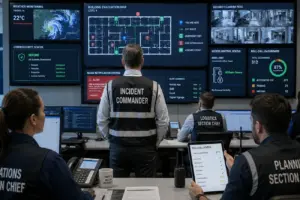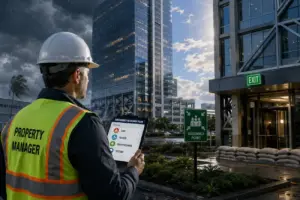
Mobile Apps Transforming Emergency Management In today’s digital landscape, mobile technology is revolutionizing how property and facility managers approach emergency preparedness and response. With smartphones becoming ubiquitous across North America, these powerful tools are creating new possibilities for enhancing occupant safety, streamlining communication, and ensuring regulatory compliance. This transformation is particularly significant for those responsible for commercial and residential properties, where effective emergency management directly impacts lives and liability.
The Rise of Mobile Technology in Emergency Management
Property and facility managers face mounting pressure to ensure occupant safety while navigating complex compliance requirements. Mobile applications have emerged as essential tools in this environment for several compelling reasons:
- Immediate Response Capability: During emergencies, every second counts. Mobile apps deliver critical information instantly to all stakeholders, regardless of their location.
- Universal Accessibility: With smartphone ownership exceeding four in five adults in North America, mobile platforms provide unprecedented reach for emergency communications.
- Compliance Documentation: Digital tools automatically capture training completion, drill participation, and emergency response actions, creating audit-ready records.
- Operational Efficiency: Mobile solutions eliminate manual processes like distributing paper plans or making individual phone calls during emergencies.
According to industry guidance, buildings that use mobile emergency response tools can improve the speed and clarity of notifications and coordination during evacuations compared to relying solely on traditional methods. This improvement directly translates to enhanced safety outcomes and reduced liability exposure.
Key Features of Modern Emergency Management Apps
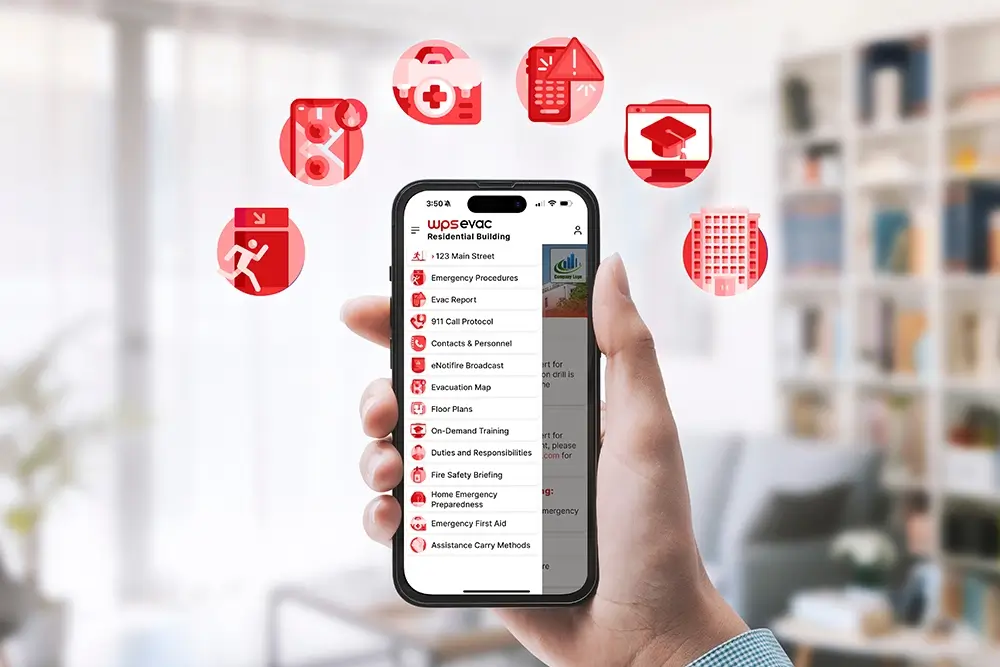
Today’s emergency management applications offer sophisticated capabilities that transform how property managers prepare for and respond to critical incidents:
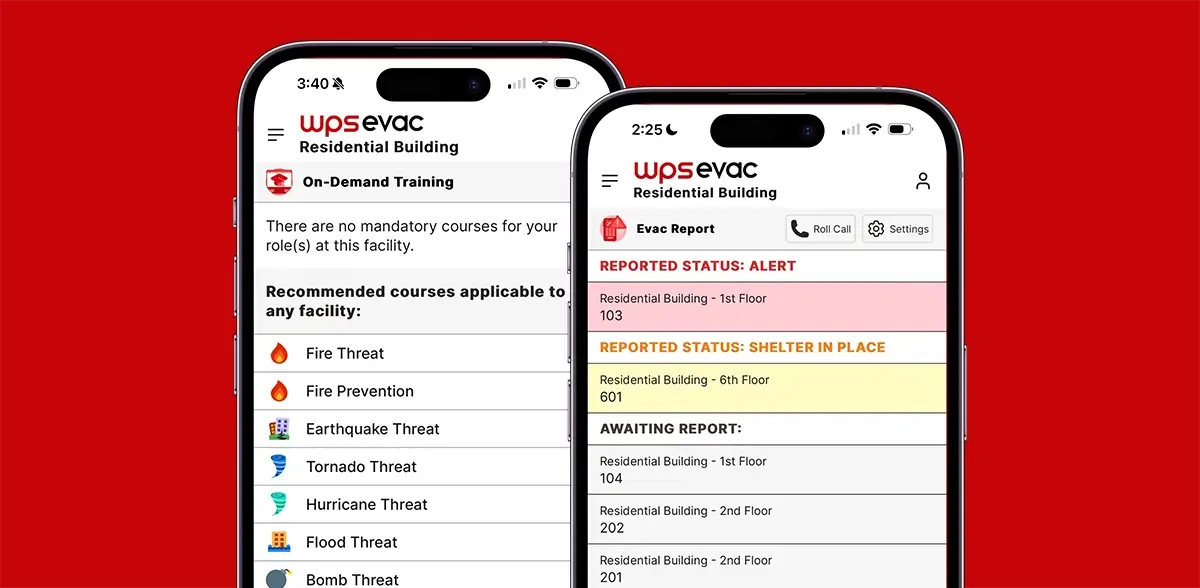
- Real-time Notifications and Alerts: Mobile platforms deliver immediate warnings about fires, floods, or security concerns through multiple channels (push notifications, SMS, voice) to supplement, never replace, required audible/visible fire-alarm notification appliances. These systems log message delivery/opens to help confirm receipt, reducing the chance that critical information is missed.
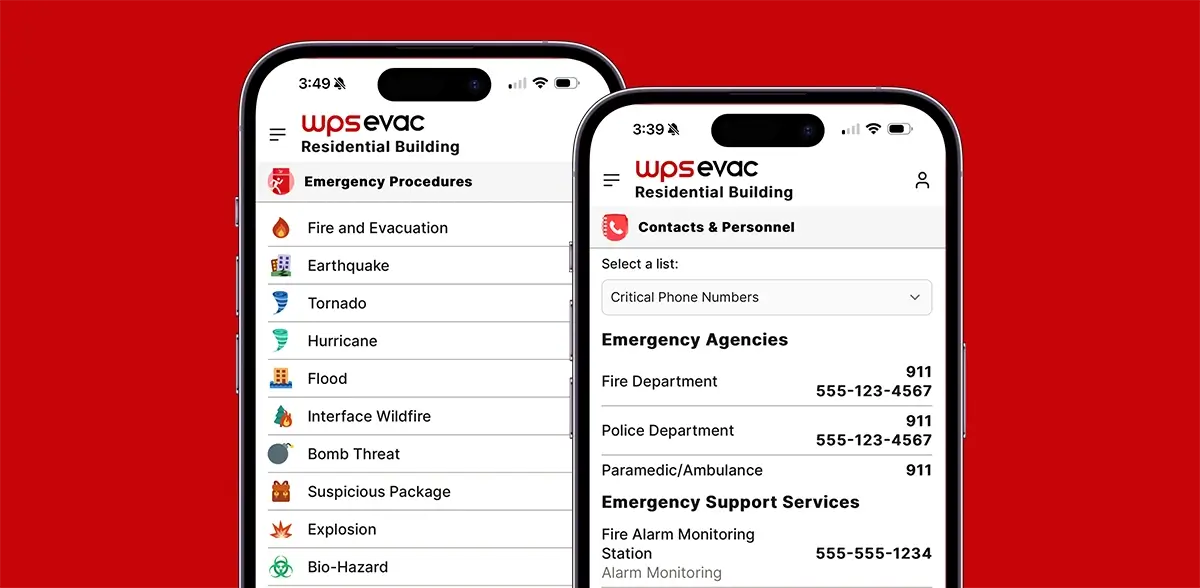
- Digital Access to Emergency Plans: Up-to-date evacuation routes, assembly area maps, and emergency procedures are instantly accessible to authorized personnel. This eliminates the need for physical manuals that quickly become outdated or misplaced.
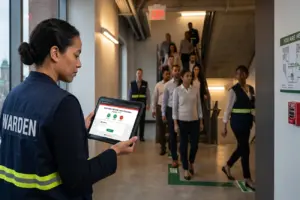
- Roll Call and Occupant Accountability: During evacuations, tracking who has safely exited the building is crucial. Mobile apps enable digital check-ins and help identify individuals requiring assistance, providing a clear picture of who might still be in danger.
- Participation Tracking and Compliance Documentation: Training completion, drill participation, and emergency response actions are automatically recorded, creating comprehensive audit trails that demonstrate due diligence to authorities and insurers.
Benefits for Property Managers and Tenants
Implementing mobile emergency management solutions delivers significant advantages for both property management teams and building occupants:
For Property Managers:
- Reduced Liability Exposure: Comprehensive digital records demonstrate due diligence and compliance with regulations, providing protection in the event of incidents or legal challenges.
- Streamlined Communication: Centralized messaging ensures all stakeholders receive consistent information simultaneously, eliminating confusion and contradictory instructions.
- Operational Efficiency: Automated notifications, digital documentation, and remote management capabilities free staff to focus on critical response activities rather than administrative tasks.
- Enhanced Reputation: Demonstrating investment in advanced safety technology signals to tenants, visitors, and insurers that safety is a priority, potentially improving tenant retention and property valuation.
For Building Occupants:
- Increased Confidence: Clear, accessible emergency instructions reduce anxiety and uncertainty during critical incidents.
- Improved Safety Outcomes: Faster notifications and clearer guidance lead to more efficient evacuations and reduced risk of injury.
- Greater Engagement: Mobile interfaces encourage participation in safety programs through familiar, user-friendly technology.
Addressing Concerns About Adoption
Despite the clear advantages, some property managers hesitate to implement new technology. Common concerns include:
Cost Considerations
Modern emergency management applications typically offer subscription-based pricing models that scale with property size and needs. In many cases, the monthly cost can start at less than a typical cellphone bill, making it a practical, budget-friendly way to improve safety and strengthen due diligence. This approach eliminates large upfront investments and allows for gradual implementation, starting with pilot programs in select buildings before expanding.
Training Requirements
Leading solutions prioritize intuitive interfaces that require minimal training. Many platforms offer self-guided tutorials, short video demonstrations, and on-demand support to ensure users can quickly become proficient without extensive time commitments.
Integration with Existing Systems
Today’s emergency management apps are designed to work alongside the systems many buildings already use, including access control and communication tools. In most cases, integrations can be set up safely and reliably with the right approvals and proper installation, so teams can streamline communication without changing how critical life safety systems are designed to operate.
User Adoption
The familiar mobile interface leverages technology that most people already use daily. This familiarity significantly reduces resistance and accelerates adoption compared to specialized equipment or complex procedures.
Building a Future-Ready Emergency Response Program
Implementing mobile technology is not merely about addressing current needs but establishing a foundation for continuous improvement and adaptation:
- Start with Clear Objectives: Define specific goals for your emergency management program, such as reducing response times, improving communication clarity, or enhancing compliance documentation.
- Implement in Phases: Begin with a pilot program in one building or section to gather feedback and refine processes before broader deployment.
- Engage Stakeholders Early: Include building staff, security personnel, and tenant representatives in the planning process to ensure the solution addresses their specific needs and concerns.
- Establish Metrics: Define key performance indicators to measure success, such as evacuation completion times, participation rates, or user satisfaction scores.
- Plan for Evolution: Choose solutions that can adapt to changing regulations, emerging threats, and technological advancements to ensure long-term viability.
Conclusion
The integration of mobile technology into emergency management represents more than a technological upgrade; it’s a fundamental shift in how property managers approach occupant safety and regulatory compliance. By providing instant communication, clear guidance, and comprehensive documentation, mobile applications help create safer environments while reducing administrative burden and liability exposure.
As emergency response expectations continue to evolve, forward-thinking property managers are leveraging these tools to demonstrate leadership and commitment to best practices. The result is not only enhanced safety outcomes but also increased confidence among tenants, staff, and stakeholders.
Discover how the WPS Evac App can help transform your emergency management strategy and keep your building community safe and connected. With over 40 years of expertise in fire and life safety planning, WPS Disaster Management Solutions offers technology-driven solutions that reduce liability, save lives, and provide peace of mind.