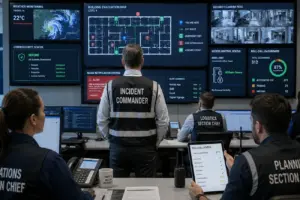

Emergency management in today’s complex risk environment requires property managers to face an expanding array of threats beyond fire emergencies. From floods and earthquakes to active threats and severe weather events, comprehensive emergency planning has become essential for building safety and liability reduction. This guide provides property and facility managers with a strategic framework for developing all-hazards readiness that protects occupants, ensures compliance, and builds confidence across your properties.
Why All-Hazards Planning Matters for Property Managers
Relying solely on fire-focused readiness leaves dangerous gaps in your emergency response capabilities. A comprehensive approach ensures your building can respond effectively to any crisis:
- Broader Protection: Severe weather events, earthquakes, chemical incidents, and security threats can occur with minimal warning. Emergency management guidance indicates that buildings with integrated, all-hazards plans are better positioned to respond effectively during non-fire emergencies.
- Reduced Liability Exposure: Courts increasingly expect property managers to demonstrate reasonable preparation for foreseeable risks beyond fire. Comprehensive planning provides documented evidence of your due diligence.
- Enhanced Tenant Confidence: When occupants understand that management has planned for multiple scenarios, they feel more secure and are more likely to renew leases or contracts.
- Streamlined Compliance: Some jurisdictions require multi-hazard planning, and many others strongly recommend it. An expanded approach often satisfies multiple regulatory requirements simultaneously, reducing administrative burden.
Identifying the Full Range of Hazards for Your Property
A systematic risk assessment forms the foundation of effective emergency planning. This process helps you identify and prioritize threats specific to your building:
Geographic Considerations
- Evaluate regional risks such as earthquake zones, flood plains, tornado alleys, or hurricane paths
- Assess proximity to industrial facilities, transportation routes, or other potential external hazards
- Consider historical emergency data for your area to identify recurring threats
Building-Specific Factors
- Review construction type, age, and systems that might create unique vulnerabilities
- Analyze occupancy patterns, including high-traffic periods and occupant demographics
- Identify critical operations that must continue during emergencies
Infrastructure Dependencies
- Map essential utility connections and their potential failure points
- Document backup systems and their limitations
- Assess accessibility challenges during various emergency scenarios
Building an All-Hazards Emergency Plan
A robust emergency management framework, informed by recognized all-hazards planning guidance, addresses every phase of an incident while clearly defining roles and communication protocols:
Unified Response Procedures
Develop standardized protocols such as the Incident Command System that can be adapted to multiple scenarios. For example:
- Evacuation procedures for fires, gas leaks, or structural concerns
- Shelter-in-place protocols for severe weather or external hazards
- Lockdown procedures for security threats
- Medical emergency response guidelines
Clear Roles and Responsibilities
- Designate an Emergency Management Team with defined leadership roles
- Assign specific responsibilities to property staff, security personnel, and tenant representatives
- Create accountability systems to ensure all responsibilities are covered during staff absences
Effective Communication Frameworks
- Establish primary and backup notification methods for different scenarios
- Develop message templates for various emergencies to enable rapid communication
- Create communication trees that ensure information reaches all building occupants
- Implement systems for two-way communication during emergencies
Coordination with External Agencies
- Develop relationships with local emergency services before incidents occur
- Document contact information and protocols for engaging public services
- Schedule periodic meetings with first responders to review your emergency plans
Integrating Technology for Multi-Hazard Readiness
Modern building safety management leverages digital tools to streamline emergency response and improve outcomes:
Centralized Digital Access
- Store emergency plans and procedures in cloud-based platforms accessible from any device
- Ensure critical information remains available even when building systems are compromised
- Maintain digital floor plans, equipment locations, and emergency contact information
Real-Time Alert Systems
- Implement multi-channel notification systems that can reach occupants through various devices
- Customize alerts based on emergency type, location, and required actions
- Enable targeted communications to specific building areas or personnel groups
Digital Accountability Tools
- Deploy mobile check-in or roll-call capabilities that track occupant status during evacuations
- Implement systems for tracking the status and needs of persons requiring assistance, and documenting their check-ins during evacuations.
- Create digital logs of emergency response actions for post-incident review
Automated Compliance Documentation
- Generate drill participation reports and training records automatically
- Track plan reviews and updates to demonstrate ongoing compliance
- Document incident responses and outcomes for continuous improvement
Training and Drills Beyond Fire
Effective emergency preparedness requires regular practice across multiple scenarios:
Scenario-Based Training Programs
- Conduct specific drills for earthquakes (drop, cover, hold on), severe weather (shelter in interior spaces), and security threats (lockdown procedures, coordinated with your AHJ and local law enforcement as appropriate)
- Practice communication protocols and decision-making during various emergency types
- Train staff on specialized equipment and systems used in different emergencies
Strategic Scheduling
- Vary drill timing to test readiness across different shifts and occupancy patterns
- Conduct announced and, where permitted by your AHJ, unannounced drills to evaluate different aspects of preparedness.
- Where permitted by your AHJ, schedule specialized drills during lower-occupancy periods to minimize disruption while still testing systems.
Meaningful Tenant Engagement
- Communicate the purpose and value of multi-hazard drills to build participation
- Provide clear instructions that help occupants understand their roles in various scenarios
- Offer incentives or recognition for active participation in emergency preparedness
Comprehensive Evaluation
- Collect immediate feedback from participants after each drill
- Document response times, bottlenecks, and communication effectiveness
- Use findings to refine procedures and address identified weaknesses
Overcoming Barriers to Implementation
Property managers often face challenges when expanding emergency planning beyond fire safety:
Resource Constraints
- Start with high-priority hazards based on your risk assessment
- Implement changes incrementally rather than attempting a complete overhaul
- Consider technology solutions that automate administrative aspects of emergency planning
- Explore cost-sharing opportunities with tenant organizations for specialized equipment or training
Stakeholder Resistance
- Communicate the liability protection benefits of comprehensive planning
- Share examples of how multi-hazard planning has protected similar properties
- Involve key stakeholders in planning processes to build buy-in
- Demonstrate how integrated planning actually reduces disruption compared to multiple siloed plans
Regulatory Complexity
- Consult with local authorities to understand specific requirements
- Work with experienced emergency planning professionals to navigate compliance challenges
- Develop relationships with fire marshals and building officials who can provide guidance
- Document all compliance efforts meticulously to demonstrate good faith
Limited Internal Expertise
- Leverage online resources and industry associations for guidance
- Consider outsourcing specialized aspects of planning to qualified consultants
- Implement technology solutions that provide built-in expertise and best practices
- Develop internal champions who can build organizational knowledge over time
Continuous Improvement and Adaptive Planning
Emergency plans must evolve to remain effective as buildings, occupants, and threats change:
Regular Review Cycles
- Schedule annual comprehensive reviews of your emergency plans
- Conduct immediate reviews after incidents or significant building changes
- Update plans when occupancy patterns or tenant operations change
- Revise procedures based on lessons from drills and actual emergencies
Performance Measurement
- Track key metrics such as evacuation times, communication effectiveness, and participation rates
- Compare performance across different emergency scenarios to identify consistent gaps
- Document improvements over time to demonstrate progress to stakeholders
- Use data to prioritize future investments in emergency preparedness
Technology Updates
- Stay informed about emerging emergency management technologies
- Evaluate new features that could enhance your building’s preparedness
- Implement system upgrades that improve functionality or user experience
- Ensure compatibility between your emergency systems and evolving building technologies
Safety Culture Development
- Promote emergency awareness through regular communications
- Recognize and reward safety-conscious behaviors and suggestions
- Incorporate emergency preparedness into tenant orientations and staff training
- Foster an environment where safety concerns can be freely reported and addressed
Conclusion
A comprehensive, all-hazards approach to emergency planning demonstrates your commitment to occupant safety while protecting your property and reputation. By systematically identifying risks, developing integrated response procedures, leveraging appropriate technology, and maintaining a culture of preparedness, you create a more resilient environment capable of handling whatever challenges arise.
The investment in comprehensive emergency planning pays dividends through reduced liability exposure, enhanced regulatory compliance, improved tenant retention, and most importantly, lives saved during actual emergencies.
Discover how WPS Disaster Management Solutions can help you implement a technology-driven, all-hazards approach to emergency planning that reduces liability and saves lives. With over 40 years of expertise in fire and life safety planning, our comprehensive emergency planning solutions provide the tools and guidance you need to protect your building and its occupants from any threat.