
Fire Drill Training for Safer Building Emergency Response
Fire drill training helps supervisory staff plan, carry out, analyze, and document drills that reflect the building, the people, and the emergency systems involved.
Fire drill training is not only about moving people through exits. It is a structured way to test whether appointed supervisory staff understand their responsibilities, whether procedures work under realistic conditions, and whether the building team can identify improvements after each drill.
WPS Introduction to Fire Drills 60-Command & Operations Training is designed for the people responsible for fire drill planning, participation, observation, and follow-up. The session is tailored to the building and supports the broader fire and life-safety program connected to instructor-led emergency training.
- 40+ years
- Thousands of buildings
- Canada & U.S.
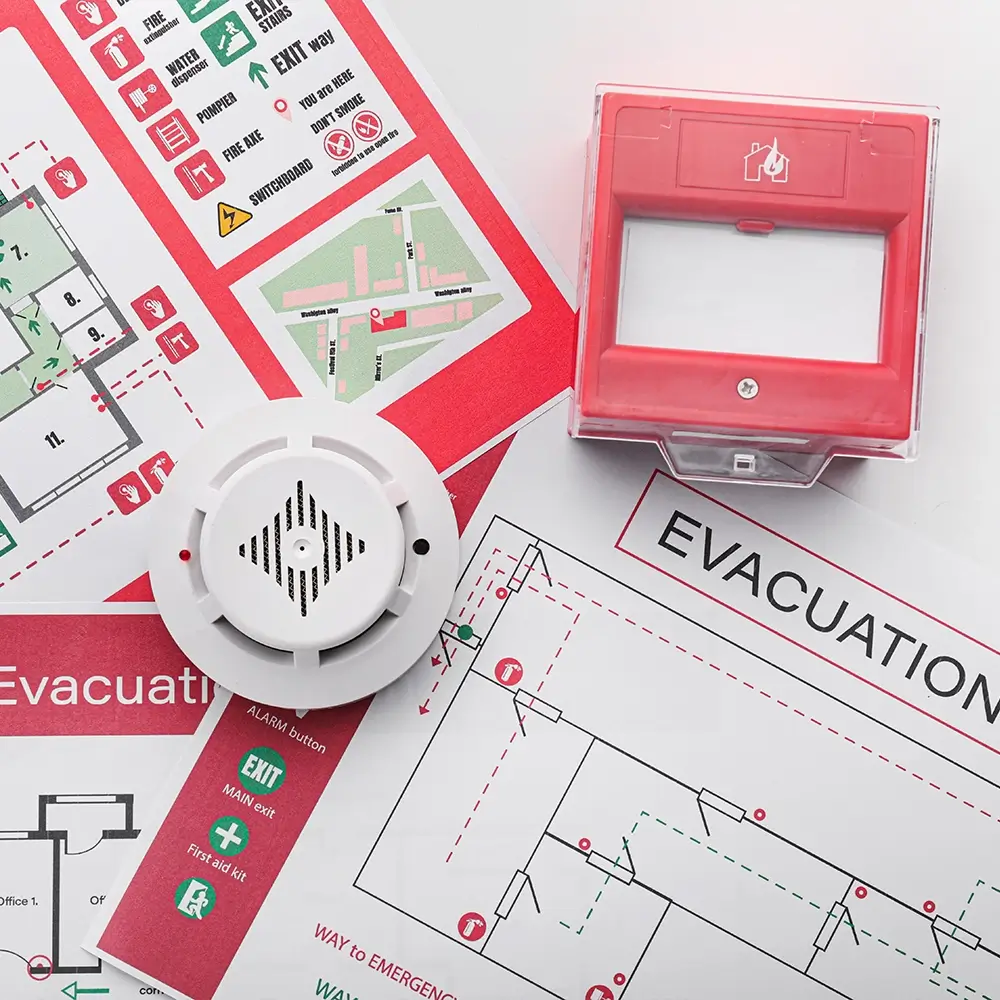












Why Fire Drills Fail Without Clear Planning
Fire drills lose value when they are treated as routine announcements instead of supervised emergency-response exercises.
A weak drill may confirm that alarms sound, but still miss whether supervisory staff can respond on time, communicate clearly, assist Persons Requiring Assistance (PRA), notify the right parties, and restore systems after the scenario. The WPS deck frames drills as training, assessment, and documentation events, not just occupant movement.
Common gaps include unclear authority, limited shift coverage, poorly chosen fire scenarios, missing pre-drill or post-drill notifications, and incomplete records. WPS Evac tools can support the surrounding program through digital plans, training records, procedures, and drill documentation in WPS Evac Software and the WPS Evac App.
What Fire Drill Training Means
Fire drill training is building-specific instruction that helps supervisory staff understand how to prepare for, participate in, observe, analyze, and document fire drills.
The deck defines supervisory staff as occupants who have delegated responsibility for the fire safety of other occupants under the fire safety plan. That distinction matters because a drill is primarily a test of assigned response roles, not a generic awareness activity.
Fire drill training may apply to property managers, operations teams, security personnel, emergency personnel, designated managers, supervisors, and others appointed to support fire safety duties. It should connect back to the building’s fire safety plan, emergency procedures, installed systems, and fire department requirements.
Supervisory Staff Are the Focus of Fire Drill Training
Supervisory staff are the people expected to carry out delegated fire safety duties when a drill or alarm condition occurs.
The WPS deck follows a simple sequence: appoint supervisory staff, train supervisory staff, and include those staff in drills. That sequence helps property teams avoid assigning emergency duties before people understand the procedures, authority, and expected actions.
During a drill, supervisory staff may be assessed on whether they can discover or report a fire, sound the alarm, notify emergency responders, respond to the fire alarm, assist with evacuation, support Persons Requiring Assistance (PRA), and take only the fire-control actions assigned by the building procedures. These duties should be supported by clear management authority before an emergency occurs.
Fire Drill Planning Starts With the Building
Fire drill planning should reflect the building’s occupancy, hazards, safety features, staff experience, occupant participation, emergency systems, and fire department expectations.
The deck emphasizes that drill procedures should be prepared in consultation with the Chief Fire Official where required by the applicable fire code. It also notes that the person in responsible charge of the building should consider the desirable degree of occupant participation, the number and experience level of supervisory staff, and the features of installed fire emergency systems.
1. Choose the drill participation level
Not every building can or should use total evacuation for every drill, so participation should match the occupancy, risk, and practical limitations.
2. Decide whether the drill is announced
Pre-announced drills may be appropriate in residential or mixed-use buildings where occupant disruption and coordination need to be managed.
3. Vary times and simulated locations
Different shifts, after-hours conditions, and fire locations can reveal different response gaps.
4. Coordinate notifications
Pre-drill and post-drill procedures may involve the fire department, building management, and the fire alarm monitoring service provider.
Planning foundation Fire safety plans
Types of Fire Drills Serve Different Purposes
Different fire drill types help building teams test emergency procedures with different levels of disruption, realism, and observation.
The deck identifies comprehensive drills, silent drills, partial or rotating evacuations, full-building evacuations, and round table or simulated drills. Comprehensive drills may involve fire alarm activation, while silent drills simulate the response without actual alarm activation and are conducted in addition to comprehensive drills.
Comprehensive drills
Silent drills
Partial or rotating evacuations
Full-building evacuations
Round table drills are also mentioned in the deck as scenario-based discussions, but this page does not build around that topic because WPS has separate round table exercise courses. For this page, the important point is that fire drill planning should select the drill type that best fits the objective, building conditions, and supervisory staff learning need.
Fire Drill Analysis Turns Activity Into Improvement
Fire drill analysis captures what happened, how supervisory staff responded, and what corrective actions may be needed.
The deck recommends having more than one observer when building size or staff participation makes that necessary. One person may monitor the area near the simulated fire origin while managers or supervisors observe responses in other parts of the building.
Analysis may review alarm response, fire department notification, evacuation support, Persons Requiring Assistance (PRA) procedures, voice communication or paging systems, smoke control equipment, elevators, equipment shutdown, door release devices, emergency power transfer, and resetting fire alarm equipment. This is where a drill becomes evidence of due diligence rather than a one-time event.
Are Fire Drills Required for Buildings?
Fire drill requirements often apply, but the details vary by jurisdiction, occupancy, building type, emergency systems, and the authority having jurisdiction.
Canada: National Fire Code-based fire codes
In Canada, National Fire Code-based fire codes and provincial or local guidance commonly address supervisory staff training, fire drill procedures, consultation with the Chief Fire Official, drill frequency, and record retention.
U.S.: International Fire Code and OSHA emergency action plans
In the United States, the International Fire Code addresses emergency planning and preparedness, while Occupational Safety and Health Administration (OSHA) emergency action plan rules require employers to train designated employees to assist in safe and orderly evacuation.
The WPS deck references intervals such as annual supervisory staff drills and more frequent drills for certain high-building conditions, but those examples should be treated as jurisdiction-specific rather than universal. Fire drill training supports due diligence and preparedness; it does not, by itself, make a building compliant.
Introduction to Fire Drills 60-Command & Operations Training
WPS Introduction to Fire Drills 60-Command & Operations Training helps building supervisory staff understand fire drill objectives, planning, drill types, analysis, and documentation.
- Course: Introduction to Fire Drills 60-Command & Operations Training
- Audience: Supervisory staff, property managers, building operations teams, security personnel, designated managers, supervisors, and assigned emergency personnel.
- Tailoring: The deck includes building name, address, instructor, and location placeholders, showing the session is adapted to the building without using placeholder content publicly.
Participants can expect to:
- Understand key fire code concepts related to supervisory staff and drills.
- Recognize fire drill objectives beyond simple occupant movement.
- Plan drills around building hazards, systems, staffing, timing, and notifications.
- Distinguish comprehensive, silent, partial, full-building, and simulated drill types.
- Analyze drill outcomes and retain documentation for due diligence.
WPS supports training through live webinar instruction by professional instructors and on-demand training available through WPS Evac Software, as reflected in the deck and WPS training pages. WPS also offers on-demand emergency training with records automatically created in the building’s WPS Evac Software system, and qualifying new WPS Fire Safety Plan or Multi-Hazard Emergency Plan engagements may include a free 1-year WPS Evac subscription.
- 40+ years
- Thousands of buildings
- Canada & U.S.
Fire Drill Training Answers
Fire drill training prepares supervisory staff to plan, participate in, assess, and document building-specific fire drills that support emergency readiness and due diligence.
What is fire drill training?
Fire drill training is building-specific instruction for supervisory staff and assigned emergency personnel. It explains fire drill objectives, planning considerations, drill types, observation methods, documentation expectations, and how drills connect to the building’s fire safety plan and emergency procedures.
Who needs fire drill training?
Fire drill training is for property managers, building operations teams, security personnel, supervisory staff, designated managers, supervisors, and assigned emergency personnel who have delegated fire safety responsibilities. The audience is role-based, not general occupant awareness.
How does WPS deliver fire drill training?
WPS delivers fire drill training through professional instructor-led sessions, including live webinar delivery, with building-specific tailoring shown in the deck. WPS also supports on-demand training and records through WPS Evac Software and the WPS Evac Mobile App where configured.
Fire Drill Training FAQs
Fire drill training questions usually focus on supervisory staff duties, drill planning, documentation, and how requirements differ by building.
What is fire drill training for supervisory staff?
Fire drill training for supervisory staff teaches assigned building personnel how to prepare for, participate in, observe, analyze, and document fire drills. It focuses on people with delegated fire safety responsibilities under the building’s fire safety plan, not general occupant awareness.
Is fire drill training required for every building?
Fire drill training requirements vary by jurisdiction, occupancy, and building type. National Fire Code-based fire codes in Canada and the International Fire Code or OSHA emergency action plan rules in the United States may require training, drills, procedures, or designated evacuation personnel depending on the building.
What should a fire drill record include?
A fire drill record should document the drill date, participating persons, drill type, fire drill scenario, summary analysis, and outcomes. The WPS deck also notes that records should be retained for at least 12 months after the drill, where that requirement applies.
Can an accidental alarm count as a fire drill?
An actual fire incident or accidental fire alarm activation may be accepted as a required fire drill if the incident is thoroughly analyzed, supervisory staff responses are assessed, outcomes are documented, and corrective measures are implemented where needed. Acceptance depends on the authority having jurisdiction.
What types of fire drills are covered in fire drill training?
Fire drill training may cover comprehensive drills, silent drills, full-building evacuations, partial or rotating evacuations, and simulated or round table drills. The WPS deck treats drill type as a planning decision based on the objective, building conditions, and supervisory staff needs.
How should buildings without fire alarm systems conduct fire drills?
The WPS deck notes that some assembly occupancies required to conduct fire drills may not have fire alarm systems. In those cases, supervisory staff must be trained to verbally or otherwise instruct and direct occupants to leave using the nearest or alternate exit.
Does fire drill training make a building compliant?
Fire drill training supports due diligence, but it does not make a building compliant by itself. Requirements vary by jurisdiction, occupancy, and building type, with Canadian National Fire Code-based fire codes and U.S. International Fire Code or OSHA requirements applied by the relevant authority.
Request Fire Drill Training for Your Building
After the form is submitted, a WPS representative will contact you about the building, audience, and next steps for Introduction to Fire Drills 60-Command & Operations Training.