
Building Emergency Response Plan Training for Fire Safety and Multi-Hazard Readiness
Building emergency response plan training helps assigned personnel understand plans, roles, life-safety systems, and emergency decision-making before an incident occurs.
Fire safety and multi-hazard plans only work when the people named in them understand what to do. This WPS training page is for building owners, property managers, facility teams, security, operations staff, and emergency supervisory personnel who need practical role clarity across fire and other building emergencies.
WPS Fire Safety & Multi-Hazard Plan 120-Command & Operations Training introduces the plan, the team, emergency versus disaster concepts, life-safety systems, threat awareness, and building-specific emergency procedures.
- 40+ years
- Thousands of buildings
- Canada & U.S.
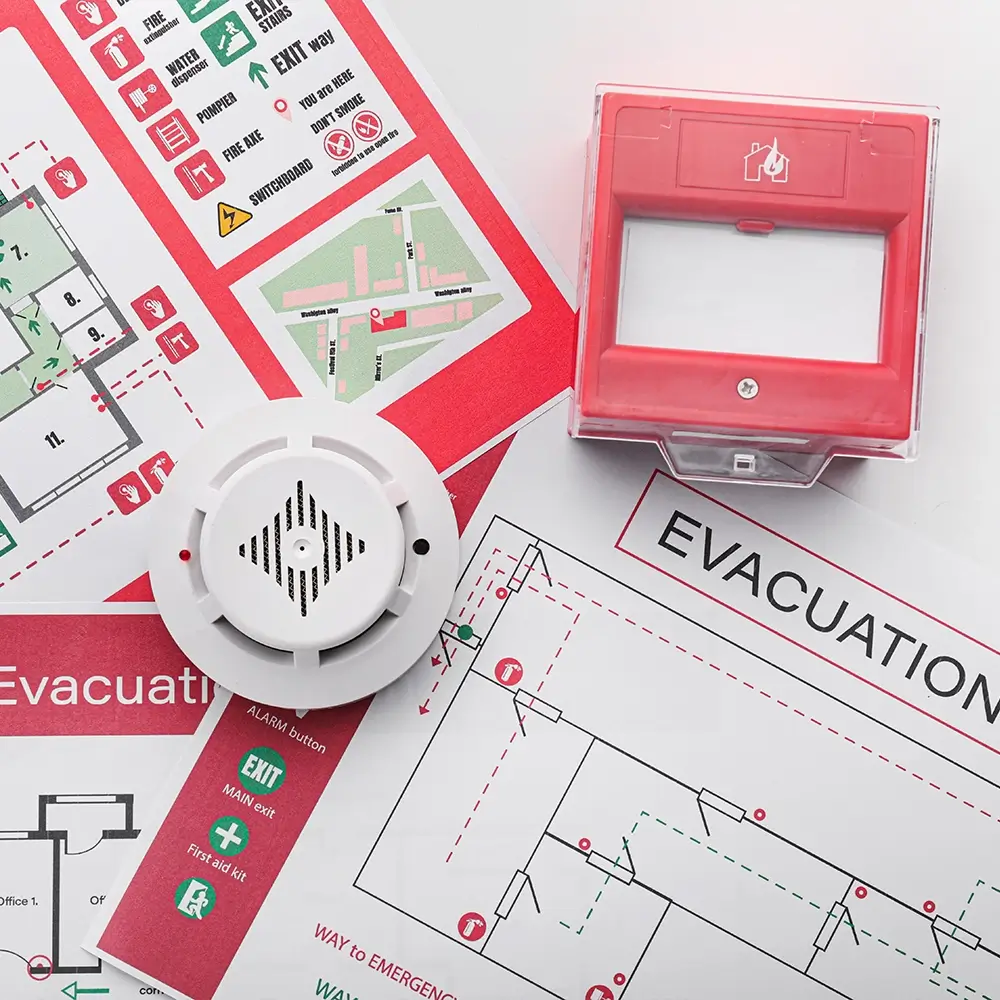












Why Emergency Plans Fail Without Trained People
Emergency plans fail when assigned personnel do not know their roles, reporting structure, systems, or decision points.
A written plan can reduce panic and indecision, but it cannot manage the building on its own. The deck is clear that community first responders cannot do everything alone, and that building emergency personnel help protect occupants by following the plan, sharing vital information, and supporting response.
Without training, common gaps include outdated manuals, unclear authority, poor communication with first responders, blocked exit pathways, and confusion between emergencies that responders can quickly take over and disasters where local resources may be delayed.
What Is a Building Emergency Response Plan?
A building emergency response plan is a building-specific guide that assigns responsibilities, procedures, systems, and communication steps for protecting occupants during fire and other emergencies.
The deck frames emergency plans as a way to help building owners and managers prepare, implement, and carry out code provisions and best practices. Fire safety plans address code-based fire procedures, while multi-hazard plans address other threats such as natural disasters and human-induced events.
A strong plan is current, accessible, and understood by the people expected to use it. WPS supports this work through fire safety plans, multi-hazard emergency plans, and role-specific training.
Building Emergency Personnel and Their Responsibilities
Building emergency personnel turn the plan into coordinated action by managing roles, reports, exit control, occupant support, and communication.
The deck identifies a supervisory structure that may include a Fire & Life Safety Director, Deputy Fire & Life Safety Director, Building Incident Commander, Building Response Team, Lobby and Exit Control Personnel, Assembly Area Coordinators, Floor Wardens, Deputy Floor Wardens, and Assistance Monitors.
- Fire & Life Safety Director: administers, maintains, and implements the plan.
- Building Incident Commander: manages the incident until danger has passed and the building is secure.
- Building Response Team: verifies emergency conditions and reports findings.
- Assembly Area Coordinator: receives evacuation reports and documents problems.
- Lobby and Exit Control: helps prevent entry and keeps exits clear.
- Floor Warden Team: supervises coworkers or staff during evacuation.
- Assistance Monitors: support Persons Requiring Assistance (PRA) to a safe area.
- Fire & Life Safety Director
- Deputy
- Building Incident Commander
- Building Response Team
- Lobby and Exit Control
- Assembly Area Coordinators
- Floor Wardens
- Deputy Floor Wardens
- Assistance Monitors
How Incident Command System (ICS) Supports Building Response
Incident Command System (ICS) gives building teams a scalable structure for command, operations, logistics, planning, intelligence, finance, and administration.
The deck states that the plans are based on Incident Command System (ICS), an international standard built around one Incident Commander and scalable response functions. For buildings, this matters because routine emergencies and larger disasters need clear authority, organized information, and defined reporting lines.
In practice, the building team collects vital information, relays it to community first responders, assists as directed, and keeps the response organized until the incident is resolved or external responders assume control.
Commander
Why the Difference Matters for Building Teams
An emergency is usually short-duration and response-led, while a disaster can overwhelm local resources and leave building teams waiting longer.
The deck defines an emergency as a situation posing immediate risk to health, life, property, or environment, such as a building fire, medical emergency, or hazardous materials spill. In these events, fire, ambulance, or police may be available and able to take over quickly.
A disaster is different because the need is greater than available resources. Earthquakes, tornadoes, floods, hazardous materials events, severe weather, and explosions can disrupt responders, utilities, life-safety systems, and normal building operations for hours, days, or longer.
Short-duration
Hours, days, or longer
Fire, ambulance, or police may be available
Need is greater than available resources
Protect occupants until responders take over
Keep the response organized for longer
Support responders who can quickly take over
Rely on the plan, roles, communications, and supplies
Life-Safety Systems and Exit Pathway Awareness
Life-safety systems help occupants and building personnel respond, but only when the team understands what systems exist and how they affect movement.
The deck highlights fire alarm systems, suppression systems, elevators, emergency power, emergency exits, communications, crossover floors, and general building information. These systems support response, but conditions such as smoke, heat, debris, hazardous materials, blocked stairs, or crowd flow can change how safe an exit path is.
Training should connect the written plan to the actual building. WPS instructor-led sessions are tailored to alarm systems, suppression equipment, exit pathways, and assembly areas, as described on the instructor-led emergency training page.
- Alarms
- Stairs
- Exits
- Crossover floor
- Assembly area
- Communication points
Is Building Emergency Response Plan Training Required?
Requirements vary by jurisdiction, occupancy, and building type, but Canadian and U.S. frameworks commonly expect documented procedures, assigned responsibilities, training, drills, and records.
Canada: National Fire Code-based fire codes and CCOHS
In Canada, National Fire Code-based fire codes and guidance from the Canadian Centre for Occupational Health and Safety describe fire safety plans as building-specific documents that include evacuation procedures, staff roles, fire drills, training, and procedures for assisting occupants.
U.S.: OSHA 29 CFR 1910.38 and International Fire Code
In the United States, Occupational Safety and Health Administration (OSHA) 29 Code of Federal Regulations 1910.38 requires applicable emergency action plans to include reporting, evacuation, accountability, rescue or medical duties, contact roles, alarm systems, and employee training.
The International Fire Code also includes emergency planning and preparedness provisions for certain occupancies and operations.
WPS training supports due diligence by helping personnel understand the plan and their roles, but requirements should always be confirmed with the authority having jurisdiction.
WPS Fire Safety & Multi-Hazard Plan 120-Command & Operations Training
WPS Fire Safety & Multi-Hazard Plan 120-Command & Operations Training helps assigned building personnel understand the plan, response structure, life-safety systems, and emergency procedures for their building.
- The plan
- The team
- Emergency versus disaster
- Life-safety systems
- Threat awareness
- Building-specific emergency procedures
Course: Fire Safety & Multi-Hazard Plan 120-Command & Operations Training
Audience: property managers, facility teams, operations staff, security, building emergency personnel, and supervisory staff with command or operations responsibilities.
Tailoring: the deck includes placeholders for instructor, building name, address, local details, procedures, maps, and system references, showing that the session is adapted to the specific building without publishing placeholder content.
- 40+ years
- Thousands of buildings
- Canada & U.S.
Participants can expect to:
- Understand the purpose of fire safety and multi-hazard plans.
- Identify key emergency supervisory roles and reporting structures.
- Distinguish emergencies from disasters and why that affects response.
- Recognize life-safety systems and exit pathway considerations.
- Reinforce key messages: know your role, participate in training and drills, and use WPS Evac tools where available.
WPS supports this through instructor-led emergency training, with online screen-sharing delivery and onsite training available upon request. New WPS Fire Safety Plan or Multi-Hazard Emergency Plan engagements include a free 1-year subscription to WPS Evac Software and the WPS Evac App, supporting plan access, procedures, training records, and emergency-management workflows through WPS Evac Software and App.
Building Emergency Response Plan Training Answers
Building emergency response plan training prepares assigned personnel to understand building-specific plans, roles, systems, and emergency procedures before fire or multi-hazard incidents occur.
What is building emergency response plan training?
Building emergency response plan training is role-based instruction for personnel who help implement a building’s fire safety plan and multi-hazard emergency procedures. It explains the plan, emergency roles, Incident Command System (ICS) structure, life-safety systems, communication, and responder-support responsibilities.
Who needs building emergency response plan training?
Building emergency response plan training is for building owners, property managers, facility teams, security, operations staff, Fire & Life Safety Directors, Building Incident Commanders, Building Response Teams, Floor Wardens, Assistance Monitors, and other assigned emergency supervisory personnel.
How does WPS deliver building emergency response plan training?
WPS delivers building-specific emergency training through instructor-led sessions, with online screen-sharing delivery and onsite training available upon request. Training can connect to WPS fire safety plans, multi-hazard emergency plans, WPS Evac Software, and the WPS Evac Mobile App where configured.
Building Emergency Response Plan Training FAQs
Building emergency response plan training questions usually focus on plan responsibilities, emergency roles, requirements, and how fire and multi-hazard procedures work together.
What is building emergency response plan training?
Building emergency response plan training teaches assigned personnel how to understand and use a building’s fire safety and multi-hazard emergency plans. It covers roles, reporting structure, life-safety systems, emergency versus disaster concepts, and how to support first responders with accurate information.
Does building emergency response plan training make a building compliant?
Building emergency response plan training supports due diligence, but it does not make a building compliant by itself. National Fire Code-based fire codes in Canada and OSHA emergency action plan rules or International Fire Code provisions in the United States vary by jurisdiction, occupancy, and building type.
Who should attend command and operations emergency training?
Command and operations emergency training is intended for people with assigned building responsibilities, including property managers, facility managers, operations staff, security, Fire & Life Safety Directors, Building Incident Commanders, Building Response Teams, Assembly Area Coordinators, Floor Wardens, and personnel supporting Persons Requiring Assistance (PRA).
How is an emergency different from a disaster in building planning?
An emergency is usually an immediate, shorter-duration event where police, fire, or ambulance responders may be available quickly. A disaster can overwhelm local response resources, which means building teams may need to rely on their plan, roles, communications, and supplies for longer.
What is unique about this fire safety and multi-hazard plan training?
This training connects fire safety plan responsibilities with broader multi-hazard planning in one command and operations session. The deck covers emergency plans, supervisory staff, Incident Command System (ICS), emergency versus disaster concepts, life-safety systems, and selected threat procedures without becoming a hazard-specific course.
Why do building teams need to understand life-safety systems?
Building teams need to understand life-safety systems because alarms, suppression equipment, elevators, emergency power, communications, exits, crossover floors, and assembly areas affect how people move and how information is shared. The deck emphasizes that systems help only when personnel know what exists and how it works.
How does WPS Evac support emergency response training?
WPS Evac Software and the WPS Evac Mobile App can support emergency response training by giving authorized users access to building-specific procedures, emergency information, training records, and communication tools. WPS also offers on-demand emergency training for teams that need flexible completion tracking.
Request Building Emergency Response Plan Training
After the form is submitted, a WPS representative can review your building type, training audience, emergency plan status, and preferred delivery approach.